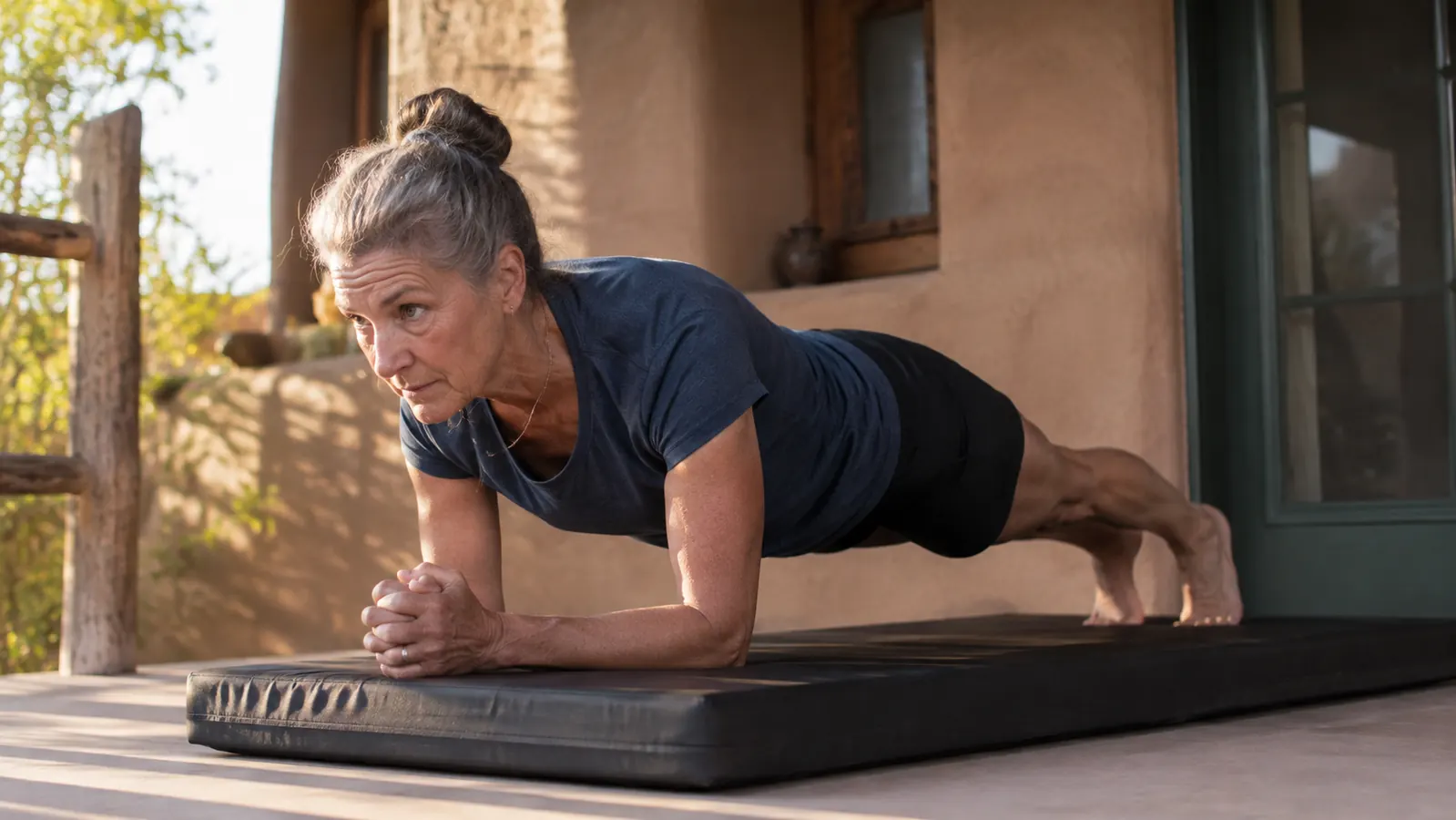
Four years ago I threw my back out picking up a bag of soil in my own yard. The kind of move you have made a thousand times, and the thousand-and-first one put me flat on the garage floor with no way to stand back up on my own. My husband had to come out and lever me onto a chair. For the next two weeks the only way I could sleep was on my side with a rolled towel under my hip.
The physical therapist got me walking again in about a month. I do not want to be ungrateful. But I came home with a list of stretches and a warning to be careful, and the ache did not stay gone. It came back every time I leaned over a planter, carried a full laundry basket, or just slept wrong. Ask anyone with a tricky back and they will tell you the same thing. Being careful is not the same as being better.
Here is what nobody told me until I figured it out the hard way with a Luyata ab wheel in my garage in Mesa. The fix was not a stronger back. It was a stronger middle. Every one of the ten reasons below is something I have lived through myself, most of them on my knees in front of the wheel, and several of them only after I stopped believing core work was a sit-up contest. None of it is medical advice. It is just what a 58-year-old woman with a finicky spine finally learned.
Start Where My Back Started
The first tool I reach for is a simple ab wheel. It is the smallest thing in my garage and it does more for my midsection than anything with a weight on it. No program, no six-pack promise, just ten minutes on the floor.
Amazon See the Ab Roller on Amazon →Your core is the load-bearing wall, and your back is just the frame
Your spine is held up from the front by deep abdominal muscles you cannot see and never feel when you do crunches. I think of them as the load-bearing wall of the house. If that wall is weak, your lower back takes every bounce, twist, and reach you make, and it complains about it. Strengthen the wall and you are taking pressure off the exact place that has been hurting. That is the whole idea, and it is embarrassingly simple once someone says it.
It stops the ache before it starts
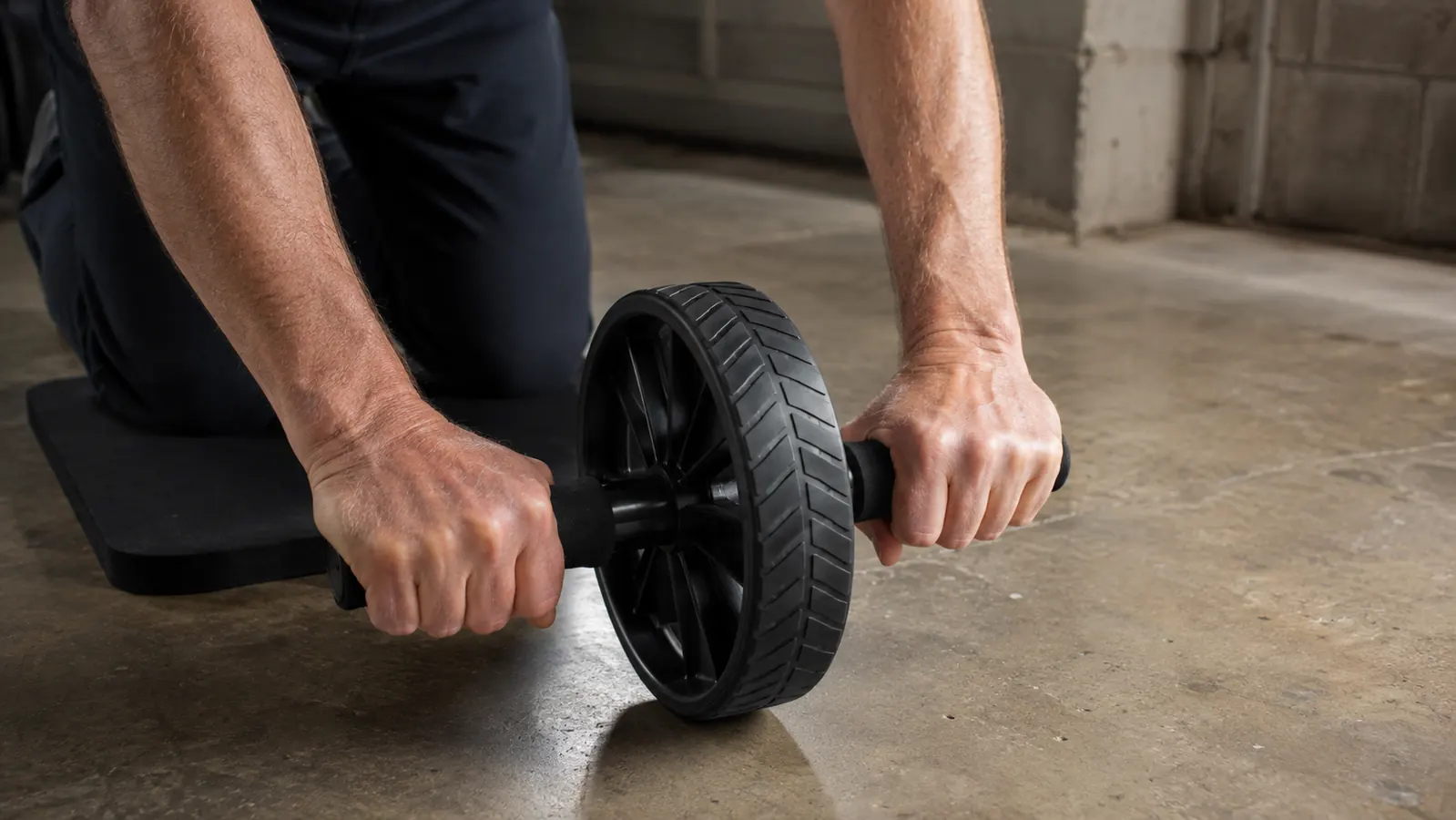
The old pattern with my back was a loop. Two weeks of feeling fine, then one bad afternoon at the grocery store or one afternoon of gardening and I was paying for it for days. A stronger middle disrupts that loop before it starts, because the brace is already there doing its job. I have now gone a full calendar year without a back flare, which has not happened since my thirties. I did not stop doing the things that used to hurt me. The work changed my body instead.
It is one of the only exercises you can do every single day
Heavy lifting needs rest days. Your muscles need to recover and your joints need the break. Core work is different. Ten minutes on the Luyata wheel most mornings has become as ordinary for me as feeding the dog, and consistency is the whole game when you are over fifty. You do not need motivation to do it, because you never wait for a recovery day. The habit is what carries you when your back is not the thing on your mind.
You do not need a gym, and you do not need weight
My squat stand and my free weights are gathering dust more than I like to admit. My Luyata wheel takes up one corner of a shelf and weighs almost nothing. For someone rebuilding after an injury, especially if your back is flaring right now, the lighter and simpler the better. You can do this in your living room, in a garage, or in front of the television. No membership, no commute, nothing to set up or break down when you are done.
It is brutally honest about how weak you actually are
An ab wheel lets you hold a plank and roll forward a few inches and feel the whole chain from your shoulders to your hips light up at once. There is no hiding behind momentum or swinging a weight. That honesty is why it works, and it is also why the first session is humbling for everyone who tries it. If you have been coasting on a strong back and an ignored belly, the wheel will tell you the truth about your middle in about thirty seconds.
It trains your back to stop guarding
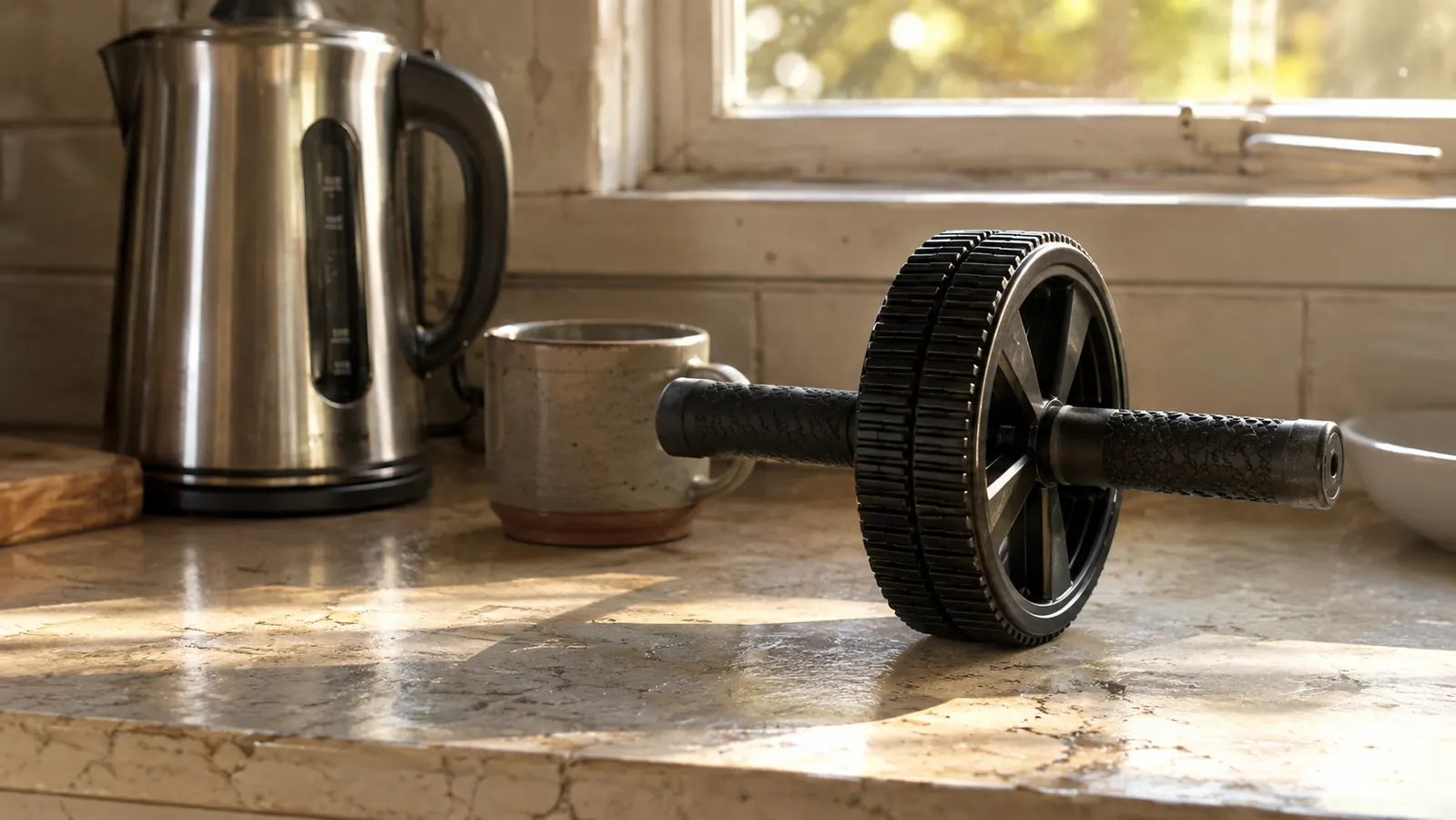
People with aching backs learn to move like they are expecting the next twinge. You brace, you hold yourself stiff, you avoid the move that hurt last time. That caution protects you today and quietly weakens you over the years, because your back is doing all the guarding alone. Core work trains your middle to hold you stable so your spine does not have to stay clenched. It teaches your body to trust the other muscles again instead of treating every bend like a crisis.
It protects you in the moves you make every single day
Gardening, getting out of a low car, bending to tie shoes, hauling a full laundry basket up the stairs, lifting a grandkid out of a crib. These are exactly the tasks that used to knock me out for days. They are also exactly the movements a stronger core makes unremarkable again. The payoff is not in the gym. It is in the Monday morning you realize you loaded the dishwasher and stood back up and never once thought about your back.
Small progress is still real progress, and it is fast
I started barely able to roll six inches without my hips sagging and my lower back arching. I could not blame the equipment. Four months later I can hold a proper rollout and come back smooth. You feel the difference in weeks, which is what kept me coming back when results with weights took months to show up. When you are rebuilding from an injury, seeing that forward line on your own body is what makes the habit stick.
It costs about what one trip to physical therapy used to
The whole Luyata kit I use costs about what a single co-pay used to run me before my insurance changed. You get the wheel, a padded knee mat, and some bands. I will be honest that I only touch the wheel and the mat. But even counting the pieces I do not use, it is close to the cheapest training tool I have ever owned, and it earns its place every single morning. Money is a real objection at our age, and this one clears it.
It gives you a goal your back can actually agree on
You cannot will a disc to feel better, and nobody can promise you a fix for a spine that has lived a life. But you can roll the wheel out a half inch farther each week. That is a target nobody argues with, and it keeps your motivation pointed somewhere useful instead of at your own pain. The best part is that the goal lives entirely in your control. No gym schedule, no coach, no waiting on a flare to pass. Just a little more range next week than this one.
What I'd Skip
Do not start on a full rollout if you have any active back pain. If your back is hurting today, this is not the week to begin, full stop. Start with a half roll, your knees on the mat, and stop the instant you feel anything in your spine rather than your belly. And skip the bundle pieces you will not use. I own the whole 10-in-1 kit and I only use the wheel and the mat. The jump rope fell apart within a week and the extra bands have sat in a drawer since the day it arrived. The wheel is the whole argument. Buy the wheel, maybe the mat, and skip the rest without guilt.
Four years after I threw my back out in the garden, I have gone a full calendar year without a flare. It was not the rest that did it. It was the roll.
My Back, Plain and Simple
If your back has been writing checks your core cannot cash, the cheapest honest step is a wheel and ten minutes on the floor. No gym, no program, no promise of a six-pack. Start small, keep it daily, and let your own week-over-week progress be the judge.
Amazon See the Ab Roller on Amazon →