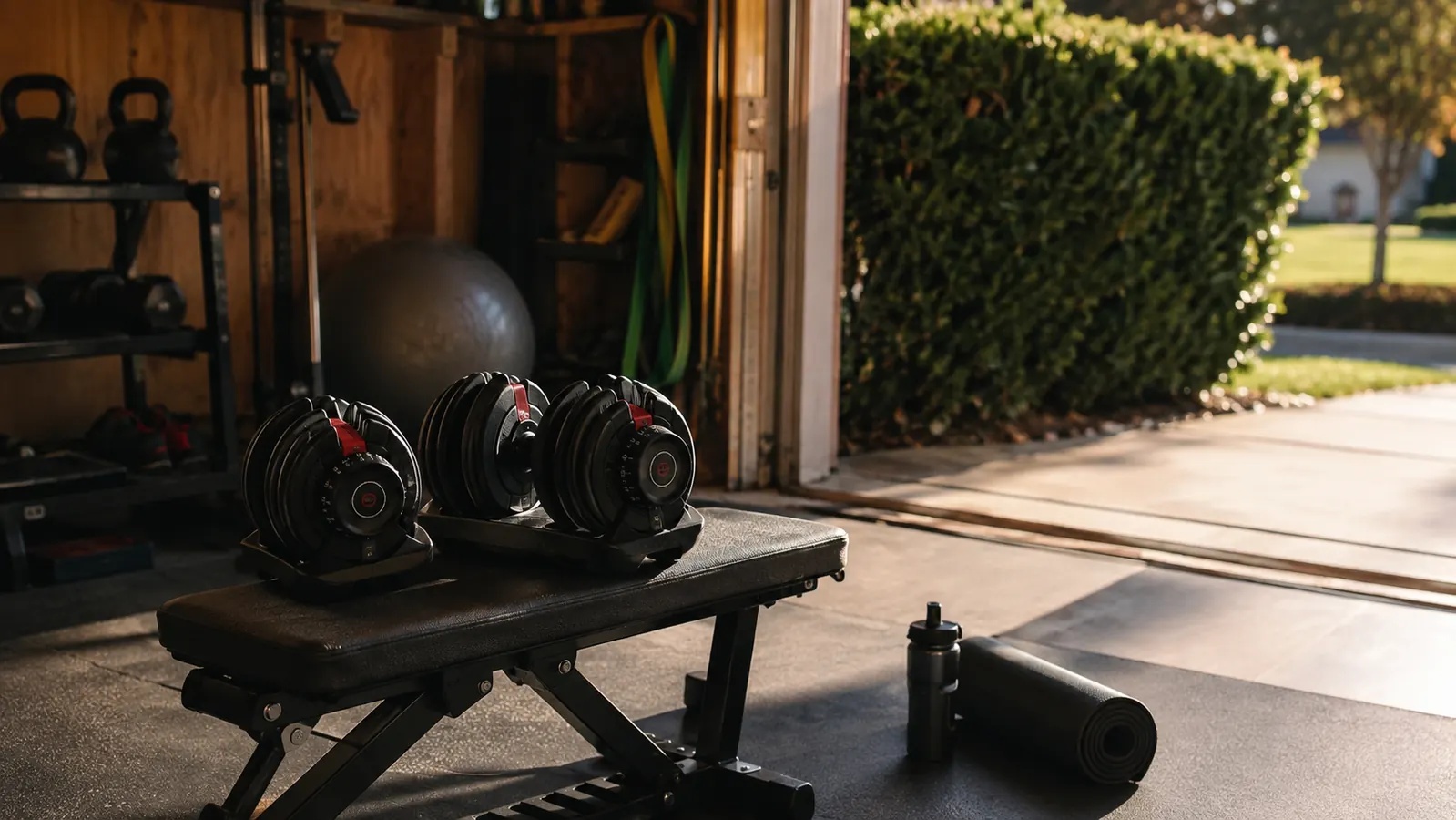
Four years ago a hike in the Superstition Mountains ended with my lower back seizing partway down the trail. The next year I spent convinced my lifting days were over, and my garage agreed: a squat stand, a bench, and a row of fixed dumbbells that gathered dust because lifting a heavy pair onto the bench was exactly the move my back complained about. Coming back meant starting over with light weights and, just as important, taking every excuse to skip a session off the table. That is a long way of saying I bought the FEIERDUN DS2 adjustable dumbbells, and six months later they are the closest thing my garage holds to a full weight room.
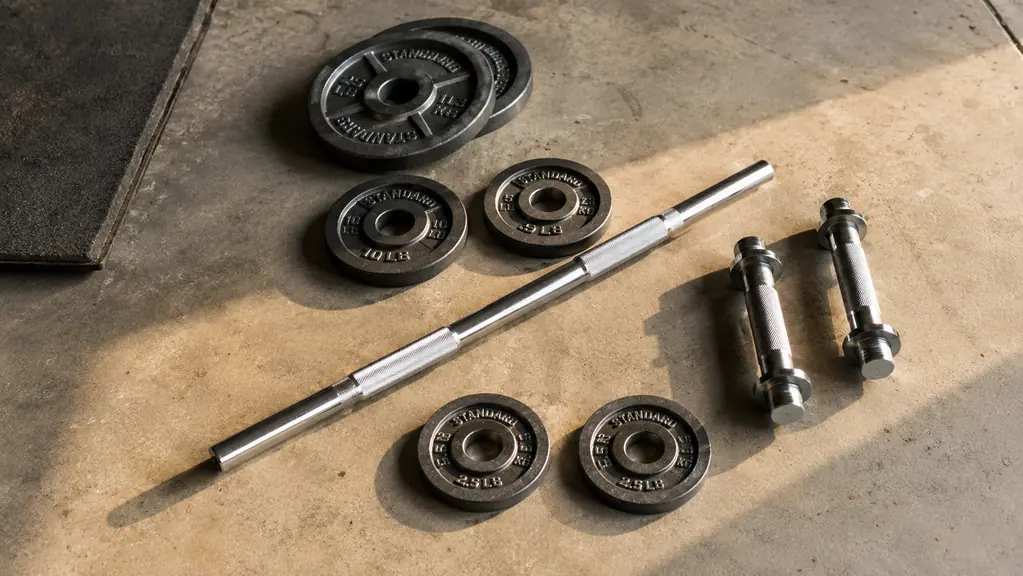
These are the budget adjustable set the listing describes as a 5-in-1 system: two dumbbell handles, a stack of plates, and a connector bar that joins the pair into a barbell. At today's price it is cheap enough that my expectations were low. Here is what six months of daily use actually taught me, including the parts the product photos leave out.
The week it arrived I set the box on the bench and told my husband I gave it one month. He said nothing, which is how he has always handled my experiments. What surprised me at the very first workout was how much the range actually covered. I am writing this review six months later, so you already know how that month went.
The Quick Verdict
If you are rebuilding strength after a break, the FEIERDUN DS2 is a genuinely useful, honest first pair of adjustable dumbbells. The plate changes and the connector bar have real limits, and the listing does not tell you about them.
Amazon Check Today's Price →Skip the rack. Start with one honest pair.
The FEIERDUN DS2 covers the weight range most returning lifters actually need, in one corner of the garage. If that sounds like your situation, check today's price before you talk yourself out of starting.
Amazon Check Today's Price on Amazon →How I've Used It
I train three mornings a week in the garage. Monday is upper body, Wednesday is legs done gently, Friday is a short full-body circuit. On paper that sounds disciplined. In practice it survives because the DS2 does not make me walk across the garage to fetch a different pair of dumbbells for every exercise.
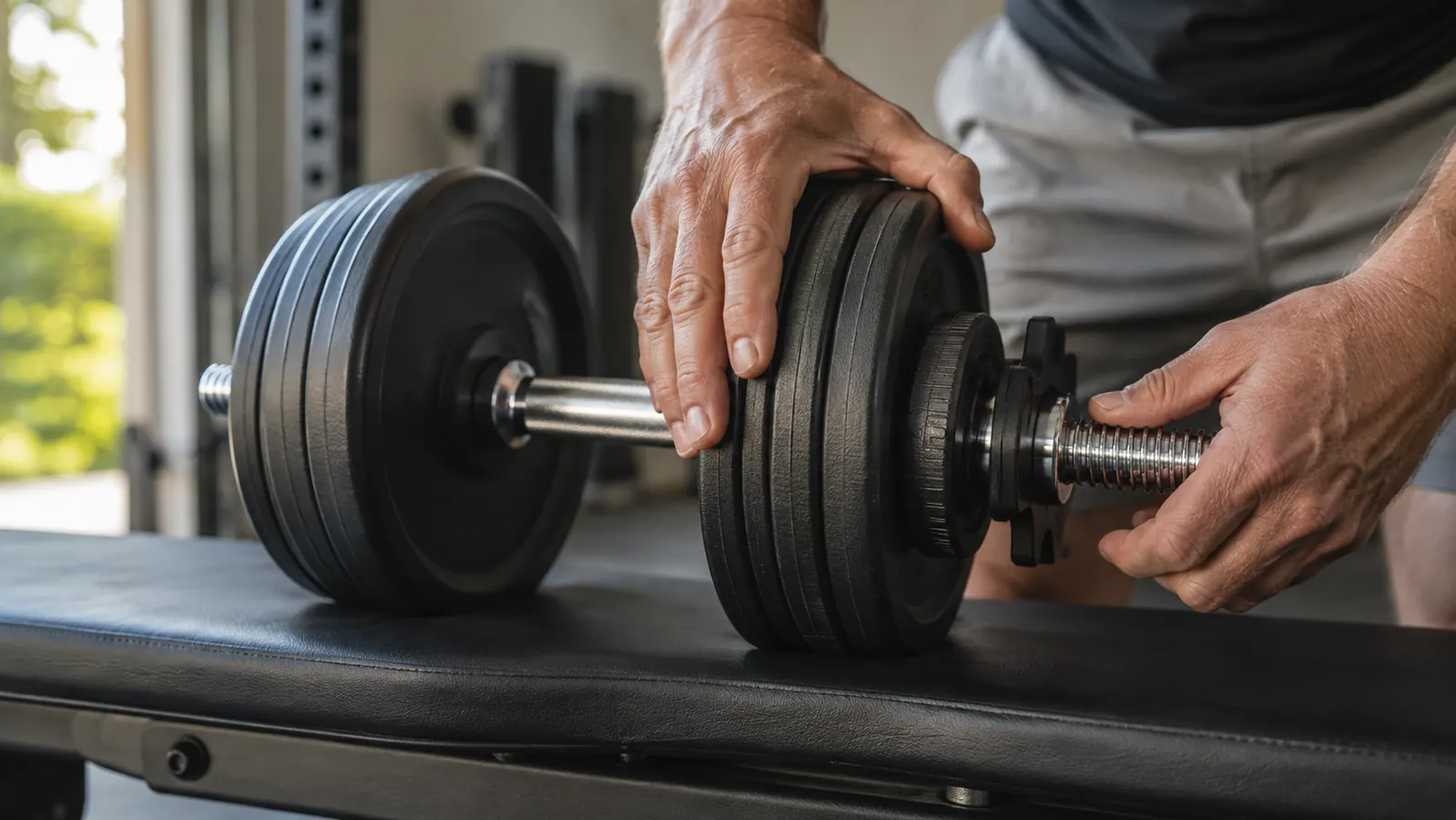
My usual loop is shoulder presses, bent-over rows, goblet squats, bicep curls, and a few sets of floor presses on the adjustable bench. Between exercises I change plates, which takes about thirty seconds a side with the twist collars. That beats the ten minutes it used to take me to pull aside the right fixed pair and then put it all back.
I started at the lightest setting and stayed there for the whole first month. My back reminds me when I respect it and stays quiet when I do not. Six months in I sit mostly at the middle settings, which is exactly where a 58-year-old rebuilding strength belongs.
The progression has been the quiet win. Because the plates add up in steps, I can nudge a single exercise up a touch every week while leaving the rest alone. For a body that has been through an injury, that fine control beats a fixed pair that jumps four sizes at once, and it is the reason my back never re-flared while I was rebuilding.
A typical morning stays short, around thirty-five minutes from first warm-up to the last stretch, because the whole setup is already waiting at the bench before I get there. That is the argument for an adjustable pair in one sentence: the workout starts the minute you decide it does.
The Weight Range, and What It Actually Covers
The DS2 adjusts through the settings the listing advertises, 20 lb at the gentle end up to 90 lb total at the heavy end, with stops at 30, 40, 45, and 70 in between. For upper-body work that range is genuinely useful. A returning lifter can do presses, rows, and curls somewhere in there for years before outgrowing the set.
Let me be honest about the math, though. The jumps between settings are wide in the middle, and the heavy end is still light once you cross the line into lower-body work. I treat the top settings as an upper-body ceiling, not a leg press target. Anyone who squats or deadlifts heavy needs a real barbell, and this is not one.
The biggest surprise was how little I needed at first. My old instincts said to grab the heaviest pair I could manage, the way I trained in my forties. The DS2 forced me to be honest, because the light settings were right there and nothing about my back argued. That honesty has been worth more than any feature on the box.
One honest note on safety, since I am the one with the bad back. An adjustable set is only as stable as its collars, and I check mine before the first set every time. It takes four seconds. No collar has ever loosened on me mid-rep, but I have had a plate wiggle when I overtightened one side more than the other, so I twist them down evenly and move on.
What the Connector Bar Does, and What It Can't
The connector bar is the trick that makes this a 5-in-1 system. You thread both dumbbell sets onto the bar, tighten the collars, and you have a short barbell for bent-over rows, upright rows, and shrugs. That genuinely works, and it is the reason I keep the pair out on upper-body day instead of in the box.
On Fridays I run a short circuit with the bar: standing rows, shrugs, and a close grip press on the bench. The bar is short, so my hands sit right where the collars are, and I learned to let my thumbs rest outside the plates for a wider stance on rows. Nothing about it handles like a gym barbell. It handles like what it is, a connector between two dumbbells, and used that way it does the job.
The limit is the bar itself. At the highest settings it flexes before the plates run out of resistance, so I stop far short of finding its ceiling. Keep it for upper back and arms and it earns its keep every week. Treat it like a loaded barbell and you will be disappointed, so do not.
There is also the time cost. Every change is two collars per side, and a circuit that jumps between light and heavy will eat a minute between exercises. That is fine if you train the way most of us over 50 train, one exercise at a time with a real rest between sets. It becomes a dealbreaker if you love supersets.
The DS2 did not get me back in the gym. It removed the excuses, and that was enough.
Six Months In: What Has Worn and What Hasn't
The twist collars still thread cleanly after months of daily plate changes, which surprised me at this price. The threads show no sign of stripping, the handles keep their grip, and the plates have picked up floor scuffs but nothing that changes the way they load. For a budget set, that is the right result.
The paint on the plates chips if you set them down hard on concrete, which I have done plenty of times. That is cosmetic, and I have stopped caring about it. Nothing has loosened, nothing has cracked, and the pair feels as solid now as it did on day one.
The day-one setup took me maybe twenty minutes: thread the collars, count the plates, tighten everything twice. I have not touched the screws since. Storage is a plastic tray from the garden section parked beside the bench, and the whole set sits under it when the Mesa summer heat gets going.
If I were buying again, the only extra I would order is a spare set of collars up front. Not because these failed, but because they are the one part that gets used every single day and a spare costs little. As it stands, I have not needed the spare, which is the better outcome.
The one thing I did not expect is that I stopped noticing them. They live on the floor beside the bench, out of the way, and they are ready when I am. That sounds small, but it is the whole reason this set gets used instead of admired.
Why One Pair Beat My Half-Empty Rack
The old rack in the corner held eight pairs, most of them bought in a burst of enthusiasm the year before my back gave out. The problem was never the weights. It was the friction. Every session meant deciding which pair, hauling it to the bench, and hauling it back, and on the days when my back felt ordinary, that friction was enough to cancel the workout.
The DS2 ended the deciding entirely. There is one pair. It lives at the bench. The only choice left is the one that matters, whether to train today, and I have said yes to that one far more often than I ever answered the rack question. If you want the longer case for one pair over a wall of iron, I wrote it up in the listicle on why adjustable dumbbells beat fixed weights.
The rack still stands in the corner, because taking it down felt like admitting something. Mostly it holds the pairs I never touch, while the DS2 carries the training. There is a lesson in that about what actually makes us stronger, and it is not the amount of iron in the building.
The Tradeoffs the Listing Doesn't Mention
Here is the honest part, because the review would not be worth anything without it. First, every weight change costs time and a little attention. Two collars, both hands, thirty seconds, and if you rush it the plates wobble. Second, round plates roll on a hard floor, so I keep the set parked on a small tray. Third, the top settings run out fast once legs are involved. Fourth, the connector bar flexes before it ever feels heavy.
Summer brings one more quirk. When my hands are sweaty, the twist collars turn harder, and the plates clang when you set them down. On a concrete floor that clang carries, and my neighbor has mentioned it. I fixed both with a hand towel on the bench and a slower, more deliberate change, which is honestly a fine habit at my age.
None of these killed the set for me, because they are the tradeoffs of the entire category at this price point, not flaws unique to the DS2. A twist-dial system like the Bowflex SelectTech is faster to change and costs several times as much. For what this set costs, the honest trade is your time at the collars in exchange for a wall of fixed dumbbells you do not have room for.
What I Liked
- One pair covers the upper-body range of a whole dumbbell rack
- The connector bar turns them into a serviceable barbell for rows and shrugs
- Small enough to live beside the bench, out of the way
- Light settings let a cautious return to lifting stay cautious
- Twist collars and threads have held up through months of daily changes
- A low-risk first adjustable set at today's price
Where It Falls Short
- Every weight change costs time, and rushing makes the plates wobble
- Round plates roll, so you will want a tray or a small rack
- The heavy settings run out fast for lower-body work
- The connector bar flexes well before it feels heavy
Who This Is For
Buy the FEIERDUN DS2 if you are returning to strength training after a long break, if you are starting from scratch at 50 or beyond, if your space only holds a corner of a garage, or if you are not sure home training will stick and you want to find out without committing to a rack. That last one was me four years ago, and this set made the experiment a cheap and easy one.
The sweet spot is the person who is done selling themselves on the idea of getting strong and just wants the smallest setup that still counts as training. That was me, and it still is. The DS2 is training equipment, not a monument to training, and that is exactly what a comeback needs.
Who Should Skip It
Skip it if you already lift heavy and need real load, if you train in supersets where a sixty-second plate change kills the workout, or if you want the instant dial-in of a SelectTech style system and are willing to pay for it. I put the DS2 side by side with the Bowflex SelectTech in a separate comparison, and the honest answer is that they are different tools for different priorities.
And if you already hold a gym membership you actually use, you do not need these at home either. Home and gym are different tools for the same job. Buy the set for the mornings you will not make it to the gym, not as a replacement for a routine that is already working.
The honest middle ground is still a real weight room
If a rack full of fixed dumbbells is overkill for your space and your comeback, the FEIERDUN DS2 covers the range that matters at a price that keeps the experiment affordable. Check today's price, park the set on a tray so the plates stop rolling, and start lighter than you think you need to.
Amazon Check Today's Price on Amazon →