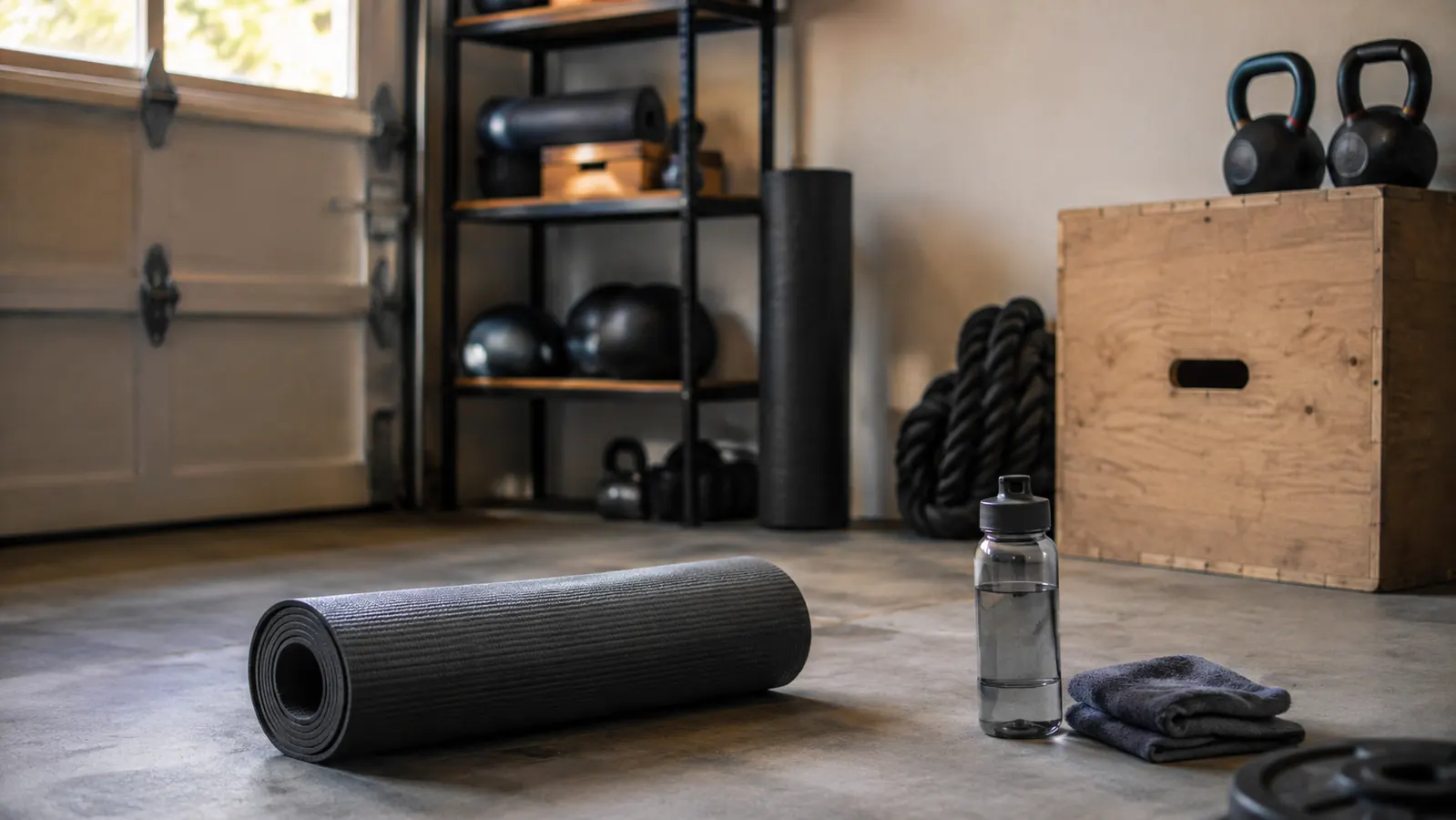
I nearly did not buy a mat at all, and honestly that near-miss taught me more than the mat itself did. My workout corner is a concrete garage floor with ceramic tile laid over one end, and for the first few weeks I dropped a folded towel down for floor stretches. That worked fine until the day I added kneeling glute work and my knees let me know, loudly and without delay, that a towel is not a floor. So I went looking for the thickest, most-reviewed mat I could find without spending serious money, and the one-inch BalanceFrom mat came out on top of nearly every list I checked. A year later I still roll it out every single morning, and my knees have not mentioned the tile since. But it is not the only good mat in the world, and after a full week of borrowing a friend's thinner Gaiam mat, for my home routine and for a few early classes, I now know exactly where each one earns its place. I get that you have probably already been burned by buying gear that looked great and ended up in a closet, so the point of this is to keep that from happening one more time.
Here is the honest short version before the detail. If most of your routine is on the floor, kneeling, lying down, working your hips, core, and mobility, buy the BalanceFrom and you are done reading. If you practice real yoga with standing balance postures, if you want a firm, grippy surface under bare feet, or if you carry your mat anywhere at all, the Gaiam is the better tool, and I am not going to twist that around to make this article come out tidy. This is a genuine split decision, not a one-sided win. The table below shows exactly where each one takes it, and then I will explain.
| BalanceFrom (1 in) | Gaiam | |
|---|---|---|
| Floor cushioning | A full inch of dense foam. Knees, hips, and wrists barely feel the tile underneath you. | A fraction of the thickness. More of the hard floor comes through on kneeling and lying work. |
| Standing balance poses | So soft your feet sink and sway a little, and tree pose gets noticeably harder to hold. | Firm and steady, a proper planted base for balancing on one foot. |
| Grip on warm skin | The foam texture is fine for dry feet and gentle floor work. | The textured face keeps holding even as your palms and the soles of your feet warm up in a longer session. |
| Weight and portability | Genuinely heavy for its size. The included strap helps, but you feel the full inch when you carry it. | Lighter, rolls tighter, and disappears over a shoulder or into a tote. |
| Price | Consistently one of the cheapest thick mats on Amazon for the area you get. | A solid mat, but part of what you pay is the name on the label. |
| Best for | Floor work: mobility, core, hips, and stretching on hard floors. | Standing yoga practice and anyone who carries a mat to a class. |
How I Compared Them
I have used the one-inch BalanceFrom nearly every day for about a year, which is the long way to learn a product's strengths and its limits. To make this comparison fair I also borrowed a friend's Gaiam mat for a full week, took it to a couple of early classes at the community center, and ran my usual home floor routine on it for several mornings in a row. I read through the review sections on both products as well, because that is where the honest complaints actually live, the ones that never make it into the marketing photos. None of that was an attempt to crown a single winner. It was to find out which mat serves which job, because the longer I used both side by side, the clearer it became that they serve different ones, and neither of them punishes you hard for picking wrong in the first week. The punishment is slower than that. You pick the too-firm mat, your knees start skipping the kneeling exercises, and eventually you just stop doing them and wonder why your routine faded. That is why this comparison matters more than it looks like it should. The right mat disappears under you until you forget it is there. The wrong one is the reason you keep finding an excuse not to get on the floor at all.
Where BalanceFrom Wins
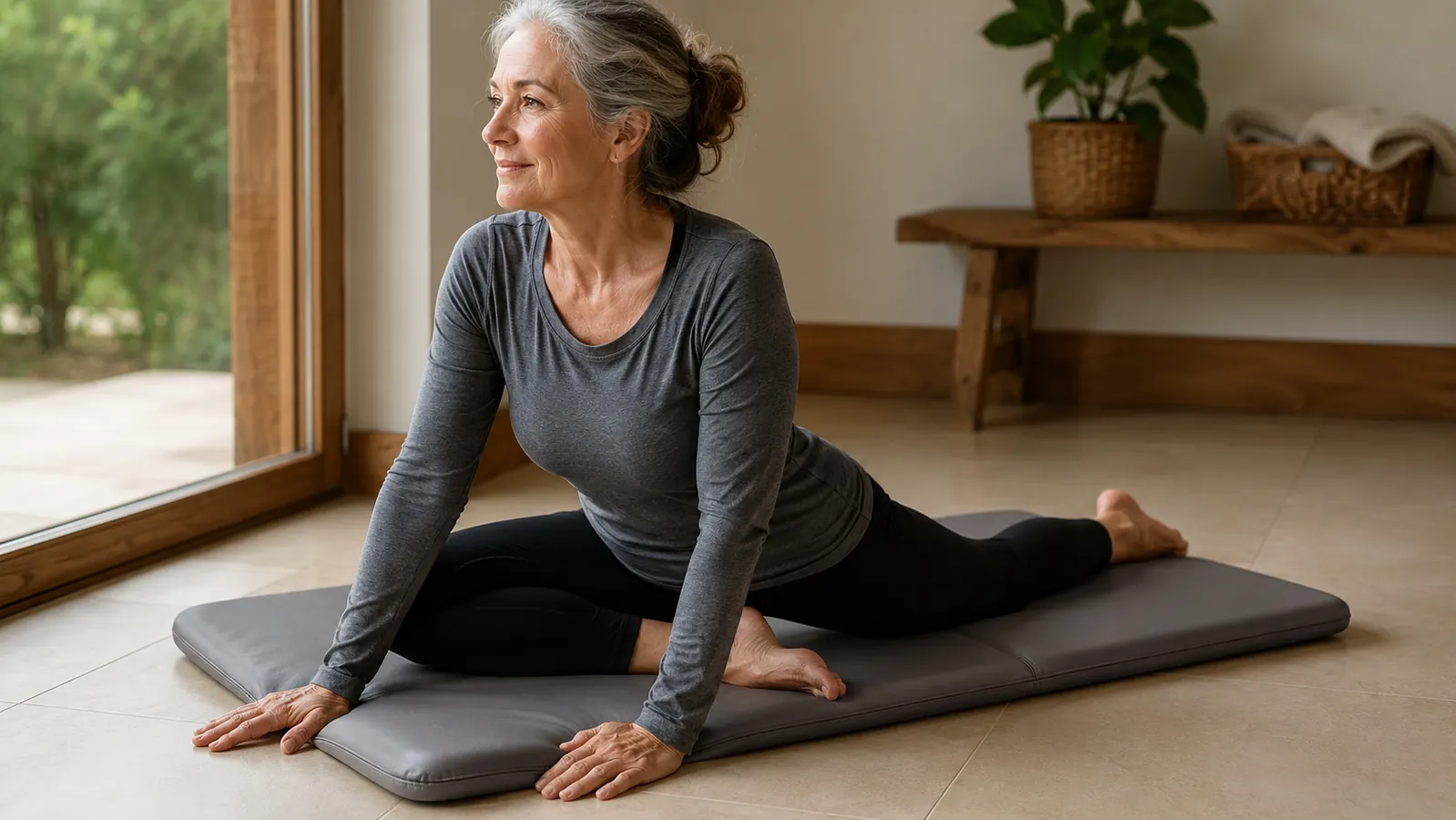
The cushioning is the entire argument, and it is not subtle. At a full inch of dense foam against roughly a quarter of that on a typical thinner mat, every kneeling position and every drop to the floor for a bird dog or a hip flexor stretch happens with the tile never reaching me. If you have an achy knee, a hip that complains on hard surfaces, or wrists that flare up under a plank, that cushion is the difference between doing the exercise and dreading it, and between finishing a set and cutting it short. Plush is not a gimmick when the joint on the other side of it is fifty-eight years old and has its own opinions about tile. My own knees are the entire reason this mat has a permanent spot in my garage, and a year in they still do not make a sound when they see it coming out. And the beauty of so much cushion is that it forgives bad days. When I am more sore or more tired, I can still get down on the floor, because landing is no longer the obstacle it used to be.
It also wins on value without being cheap junk, which is the combination people actually want and rarely get. The BalanceFrom mat carries more than eighteen thousand reviews on Amazon holding an average of 4.7 stars, the kind of number that only survives because a product is boring and dependable rather than hyped. I have rolled mine up and flattened it out hundreds of times over the past year. The anti-tear surface has not split, the foam has kept its shape instead of squashing flat in the middle, and the carrying strap that comes in the box still works as well as it did on day one. For about the price of a tank of gas, that is a trade I have no complaints about. And because it did not cost me a fortune, I do not guard it like jewelry. I kneel on it in socks, set a weight down on it now and then, and it shrugs all of it off. If your whole goal is softness under your joints without spending a fortune, I have not found anything at a higher price that beats it. The surface wipes clean with a damp cloth, which matters more than it sounds like, because I train in socks on a garage floor and the mat collects a fair bit of dust over a week. A quick wipe on Sunday and it looks near new again. The thickness helps in a quieter way too. A thin mat curls at the corners and becomes something you catch a toe on in the dark; an inch of dense foam lies flat, holds its place against the wall, and does not slide when I step onto it mid-set.
Where Gaiam Wins
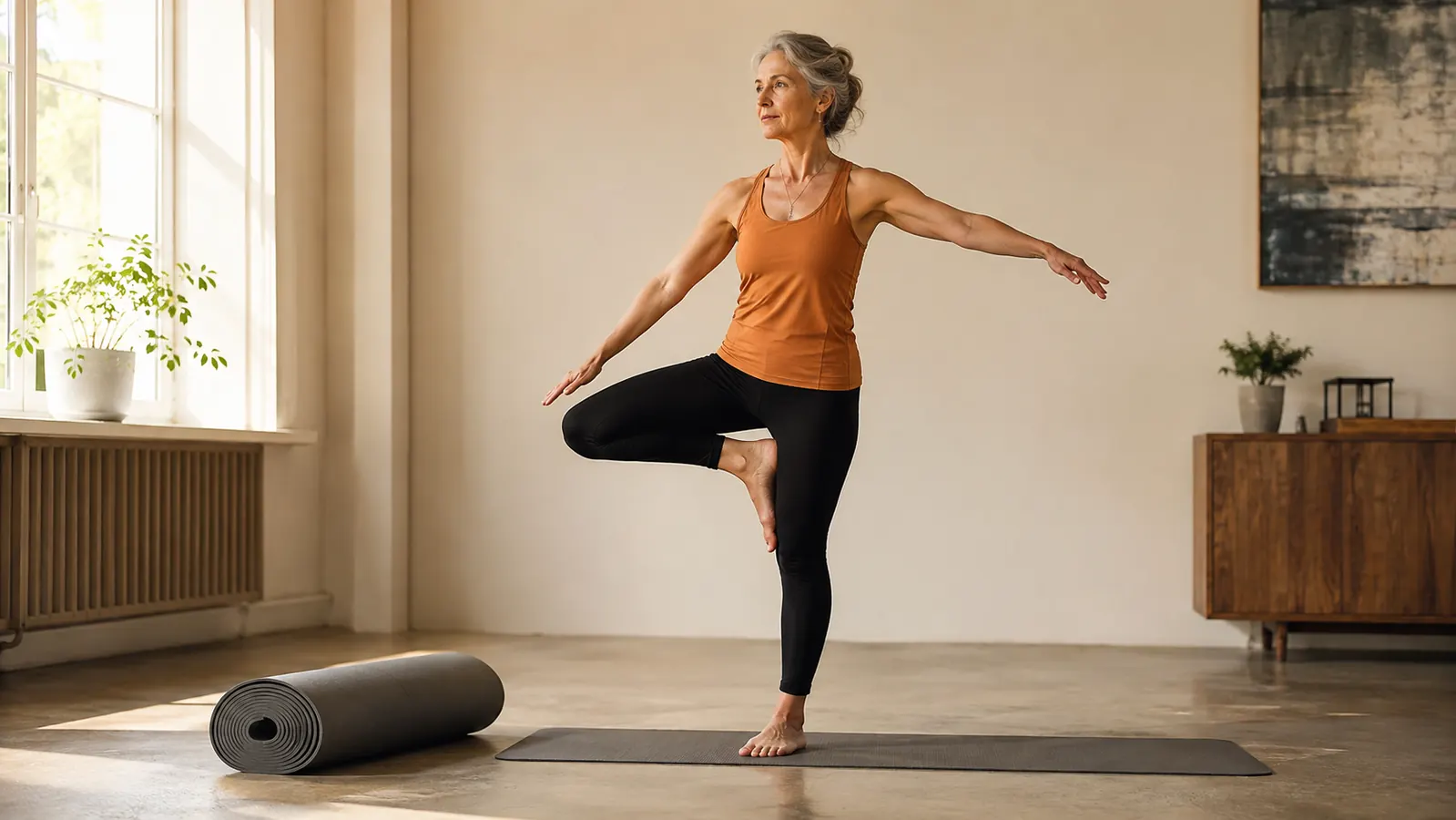
Now the part I wish more of the review comments admitted. A mat this thick is genuinely the wrong surface for standing balance work, and a firmer Gaiam does that job better. Your bare feet sink a little into an inch of foam, which makes tree pose and warrior wobble exactly when they should feel planted and still. The Gaiam's firmer face gives you a stable, predictable base, and its textured surface keeps gripping even as your palms and the soles of your feet warm up over a longer session. For flow work, standing postures, and anything where you are on your feet for a while, the right answer is a firm, grippy base, not a plush cloud underfoot. That is the honest tradeoff of every extra-thick mat, and pretending it does not exist would be a favor to no one. If you have ever balanced on one foot on a mattress, you already understand the feeling without me belaboring it.
Gaiam also wins the one nobody mentions in the reviews, which is carrying. My one-inch mat is genuinely heavy for its size, and even with its strap it is a lump to walk with or haul out to the car. A thinner Gaiam rolls small, weighs close to half as much, and disappears into a tote or over a shoulder without a second thought. The brand name matters in a practical way rather than a snobby way, because a Gaiam is stocked in plenty of physical stores, so you can feel the firmness with your own hands before you spend a cent on anything. If your mat lives in your garage like mine, that difference never touches you. If it travels to a class, a friend's house, or a patch of grass, you feel it on every single trip, and that is a real part of whether you actually use the thing instead of leaving it in the trunk. When I packed it for the community center class, the difference hit me before I was out the door, because I could sling it over one shoulder and carry a water bottle in the same hand. For anyone who plans to practice away from home even occasionally, that is not a small detail. It is the difference between the mat making it into the car and the mat staying home. The carrying case on the BalanceFrom helps, but it does not change the weight you are lifting.
If your routine stays on the floor, this is the mat to start with
For knees, hips, core, and mobility work on hard floors, the one-inch BalanceFrom is the cheap fix that actually holds up. It has earned its spot on my garage floor every single day for a year.
Amazon Check Today's Price on Amazon →Who Should Buy Which
Buy the BalanceFrom if floor work is most of what you do at home, if concrete or tile is what is underneath you, and if your knees, hips, or wrists are the reason you started this search in the first place. That describes most of the people who land on this site, and it is the mat I recommend for that job. It is also the safer bet if you are not sure yet, because most of us over 50 spend more time down on the floor working mobility and core than we do balanced on one foot. Start with cushioning, and you can decide later whether you ever genuinely need a firmer surface. Softening the floor underneath you is the single highest-leverage change you can make for an achy back, knees, or wrists, and it is cheap enough that the risk of guessing wrong is small. If you spend part of each day on your knees gardening, or down on the floor with grandkids, this mat earns its keep off the mat too.
Buy the Gaiam if standing yoga is the point of your practice, if you want a firmer base under bare feet so balance poses feel steady, or if you carry a mat to classes. Choose it as well if you already tried a thick cushioned mat and found yourself wobbling through standing poses, because that is a real experience and not a made-up objection. Neither mat is wrong, and neither is a bad product. They just answer different questions, and the expensive mistake is buying the answer to the question you are not actually asking. Match the mat to the thing you do most, and you will stop noticing it entirely, which is the real goal of any mat. People who have already been burned by buying something flashy and never using it will understand why that last sentence is the whole point. One more honest note before you decide. If you share a home with anyone else, you may be buying two of these eventually, because an achy knee in the house has a way of recognizing a good mat and quietly claiming it for its own. That is not a complaint about the product. It is a heads up that a mat this comfortable tends to stop being yours pretty fast.
An inch of dense foam does not care about brand names. It cares about the distance between your knees and the tile.
Start with cushioning when the floor is your problem
An achy joint does not read reviews, and it does not care what name is on the label. It cares about an inch of dense foam between it and the tile. The BalanceFrom gives you that at a price that does not sting.
Amazon Check Today's Price on Amazon →