You do not notice your balance going. That is the trouble with it. It never hurts and it never announces itself. One day you reach for the wall when you pull a sock on, and you grab the kitchen counter when the dog charges past, and you tell yourself it is nothing. Then a friend of mine tripped in her own driveway on a sunny morning, went down flat on the asphalt, and spent six weeks in a walking boot followed by eight weeks of not trusting her own footing. That got my attention.
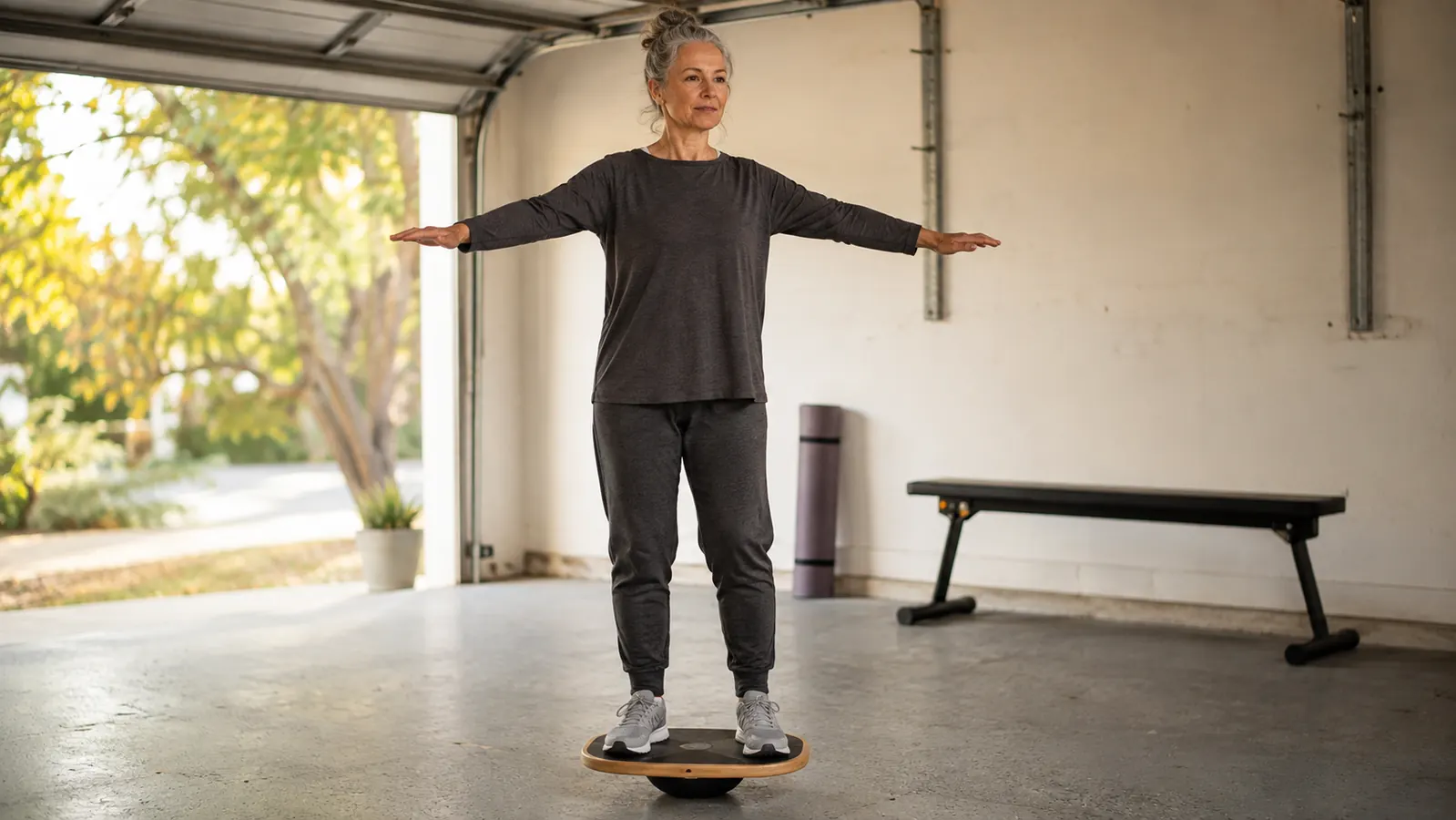
After my own lower-back episode four years ago put a pause on my strength work, I noticed how shaky I had gotten on the way back. So a year ago I picked up a wobble board, the EVERYMILE no-skid trainer, and worked it into my mornings in the garage. It is the least glamorous and one of the cheapest things I own there, and some mornings it is the most important. Here are 10 honest reasons balance training belongs in every over-50 routine.
Twenty Minutes a Week, on a Board That Costs Less Than a Tank of Gas
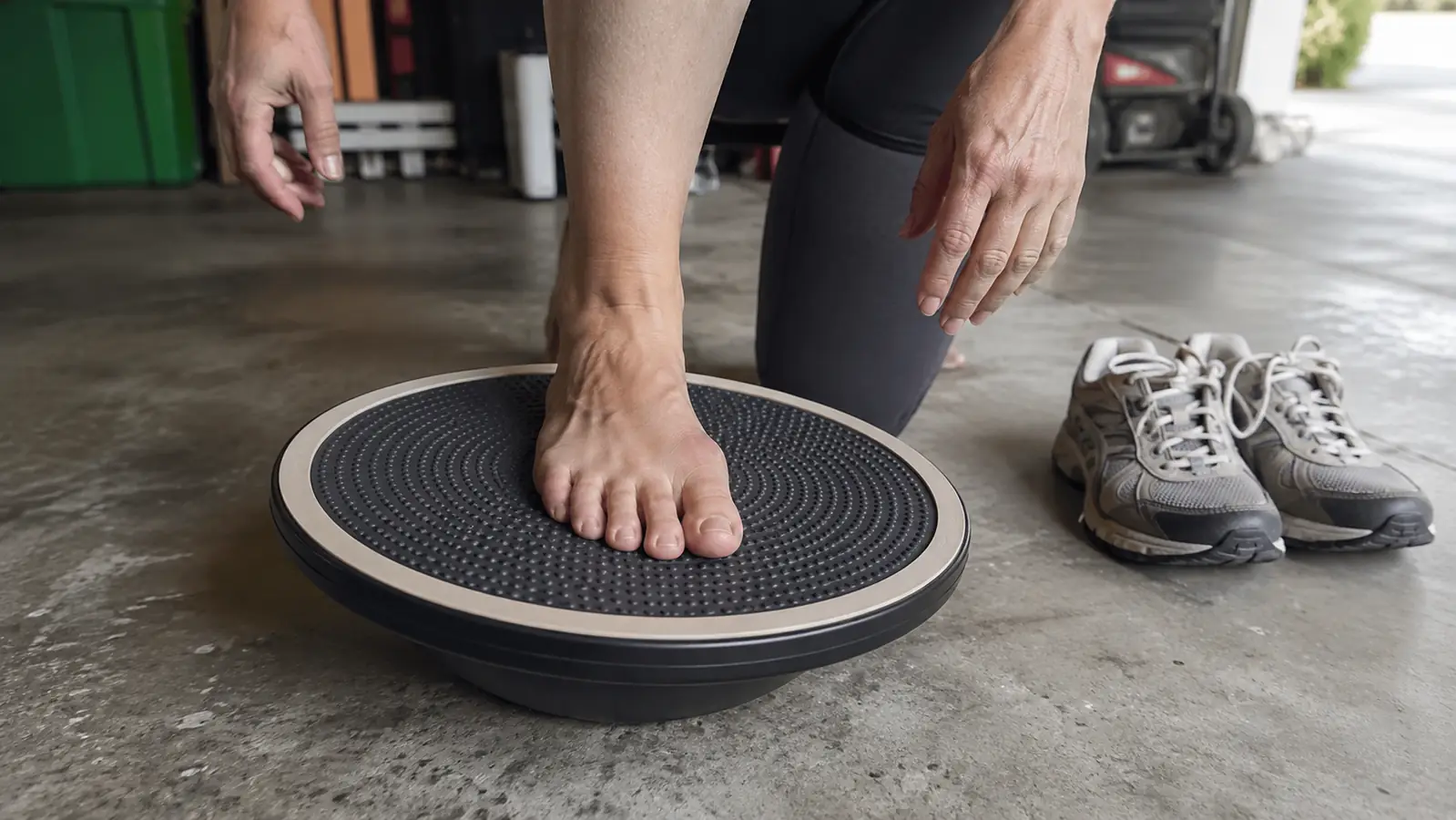
You do not need a gym, a class, or an hour carved out of your day. A wobble board sits in a corner and waits for you. The EVERYMILE board's no-skid surface and low profile make it easy to step on in bare feet right by a counter for support.
Amazon Check Today's Price on Amazon →One Bad Slip Is a Six-Week Event at Our Age
When you are 25, a trip on the curb becomes a stumble and you keep walking. When you are 57, that same trip can become a fracture, a walking boot, a stretch of dependence you did not plan for. The math on falls changes as we age, which is exactly why preventing them is worth a little dull work now. A few minutes of wobble training makes you far less likely to land on the ground in the first place.
Balance Fades Quietly, So It Deserves Training First
Strength loss you feel in the mirror and the dumbbell. Cardio loss you feel on a walk. Balance loss happens in the background, shifting your habits without an alarm. Because it is invisible, it is easy to ignore until the first stumble. Training it deliberately, before you need it, is the whole point. A wobble board is the cheapest early warning system you can buy.
It Trains the Small Stabilizer Muscles Weights Ignore
Dumbbells and machines work the big showy muscles, the thighs and shoulders and chest. The fine muscles around your ankles and hips, the ones that keep you upright on shifting ground, barely get touched by a rack. A wobble board makes those small stabilizers work every second you are on it. That is training you simply cannot get from lifting weights alone, no matter how heavy you go.
A Wobble Board Is Kind to Your Knees and Hips
My knees were the reason my rowing machine gathered dust. Board work is gentle by nature, no pounding, no jarring, just your body weight on a surface that moves with you. That makes it one of the few training tools I can use even on a bad joint day. For anyone whose hips or knees complain about stairs, it is a rare piece of equipment that does not annoy them.
Twenty Minutes a Week Is Genuinely Enough
You do not need an hour or a program or a schedule. Real balance work pays off in short, frequent doses. I do a minute or two at a time, several times a week, often while I am already standing at the kitchen counter waiting for the coffee. It adds up fast and it never feels like a chore. The board does not care if you do ten minutes at once or two minutes five days a week.
It Makes You Steadier on Stairs and Uneven Ground
The whole reason I started was the driveway. I wanted to move through the world without treating every patch of glare ice, every gravel shoulder, every unsteady curb as a hazard. What you build on a board carries over to real ground. The transfer is not instant and it is not magic, but a few months of wobble work left me noticeably more sure-footed on the stone path in my own backyard.
Your Body Relearns to Catch Itself Without Thinking
The ankle and hip reactions that stop a slip happen in a fraction of a second, far too fast for conscious thought. You train them the way you train any reflex, by giving your body lots of small surprises and letting it catch up. Every wobble is that little surprise. Over time your body gets quicker at the grabbing, bracing reaction that keeps you on your feet. That reflex is the actual safety net.
It Strengthens Your Feet, Which Almost Nobody Trains
Your feet carry you every single day and they get almost no direct attention. Wobble board work wakes up the arches, the toes, the small muscles in the sole that keep your stride stable. I noticed it in my walking shoes after a few weeks. Stronger feet are steadier feet, and steadier feet are less likely to be the reason you go down. It is free training for the most used part of your body.
It Is Cheap, Zero-Maintenance, and Takes Up Barely Any Room
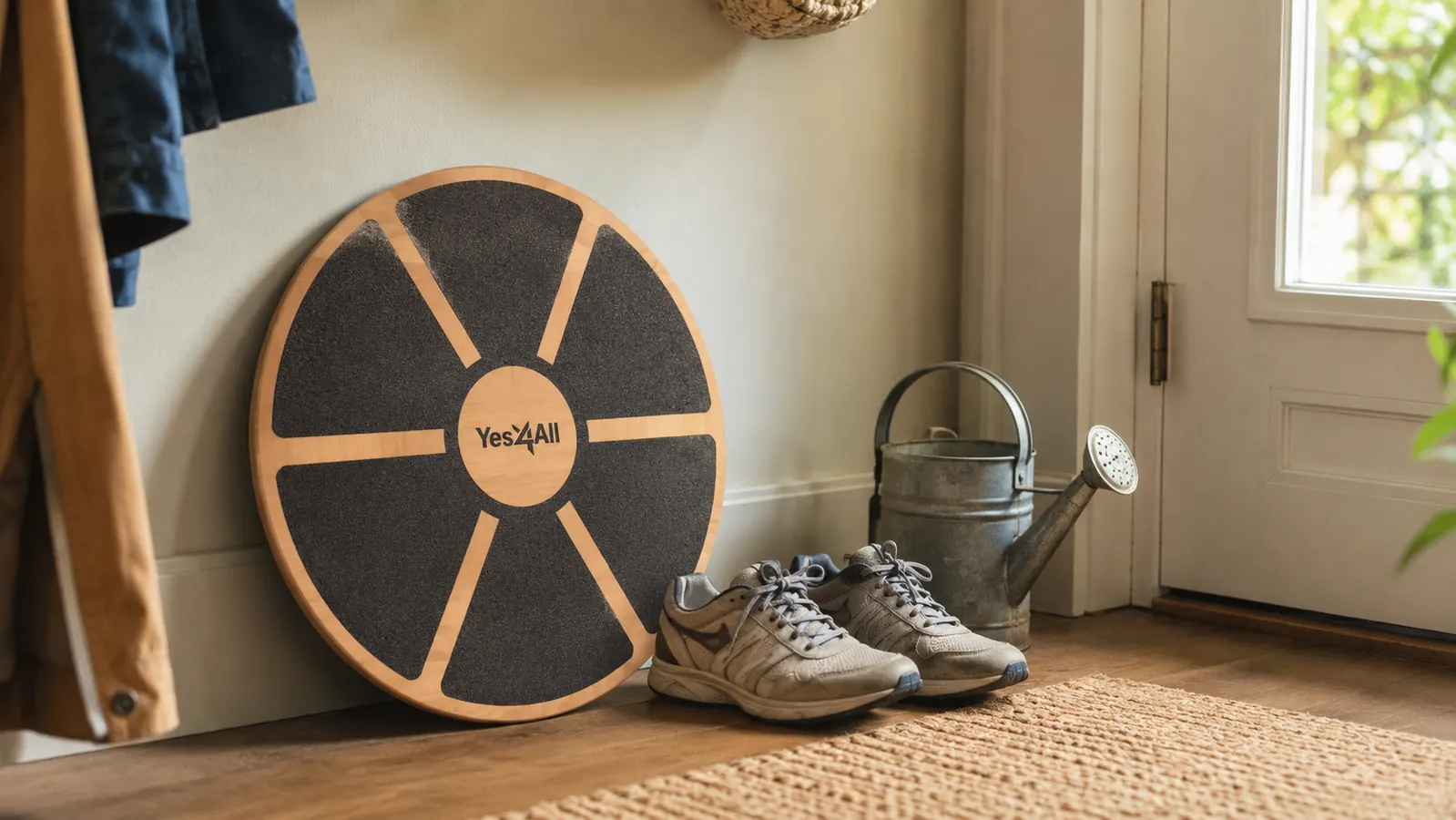
I have a garage full of gear that cost me a lot more and demanded a lot more of my patience. The EVERYMILE board costs a small fraction of a gym membership, needs no batteries, no plugs, no assembly, and leans against the wall when I am done. There is no excuse strong enough to talk yourself out of it. Low cost and low fuss matter enormously when you are trying to keep a habit going.
You Get to Watch Yourself Improve, Which Keeps You Coming Back
No one is grading you and no one is watching. The progress is yours alone: the day you hold ten seconds without grabbing the counter, then twenty, then a steady minute. That quiet, visible improvement is what pulls me back morning after morning. Most fitness progress is slow and hard to see. Balance progress shows up fast enough to keep you honest, which is the rarest thing training has to offer.
What I'd Skip
For all the good I get from a wobble board, I want to be straight with you about who should not rush into one. If you have osteoporosis, a fresh hip or knee replacement, or a doctor who told you to protect your joints, check in with that doctor before you stand on anything that moves. Same if you have already fallen more than once and feel unsteady just standing still. In those cases the right first step is a supported, seated or hands-on-wall routine, or working with a physical therapist, and a wobble board comes later, not first.
Also be honest about the fact that a board is not a cure-all. It is a piece of a bigger picture that includes strength work, good footwear, and a home without trip hazards like loose rugs and clutter. And fair warning, the first few sessions will feel small and a little silly, barely anything happening under your feet. That is normal. Give it a month before you decide it is working or not, because the payoff is real but it is not overnight.
The morning I finally held thirty seconds on the board without grabbing the doorframe, I realized my balance had come back without me ever noticing it had gone.
The Cheapest Insurance Policy in Your Garage
Balance is the first thing that fades and the most trainable thing you own. A wobble board is a small tool that does real work, no glamour required. If you are over 50 and getting back into training, this is the one piece of gear I would add before almost anything else.
Amazon Check Today's Price on Amazon →