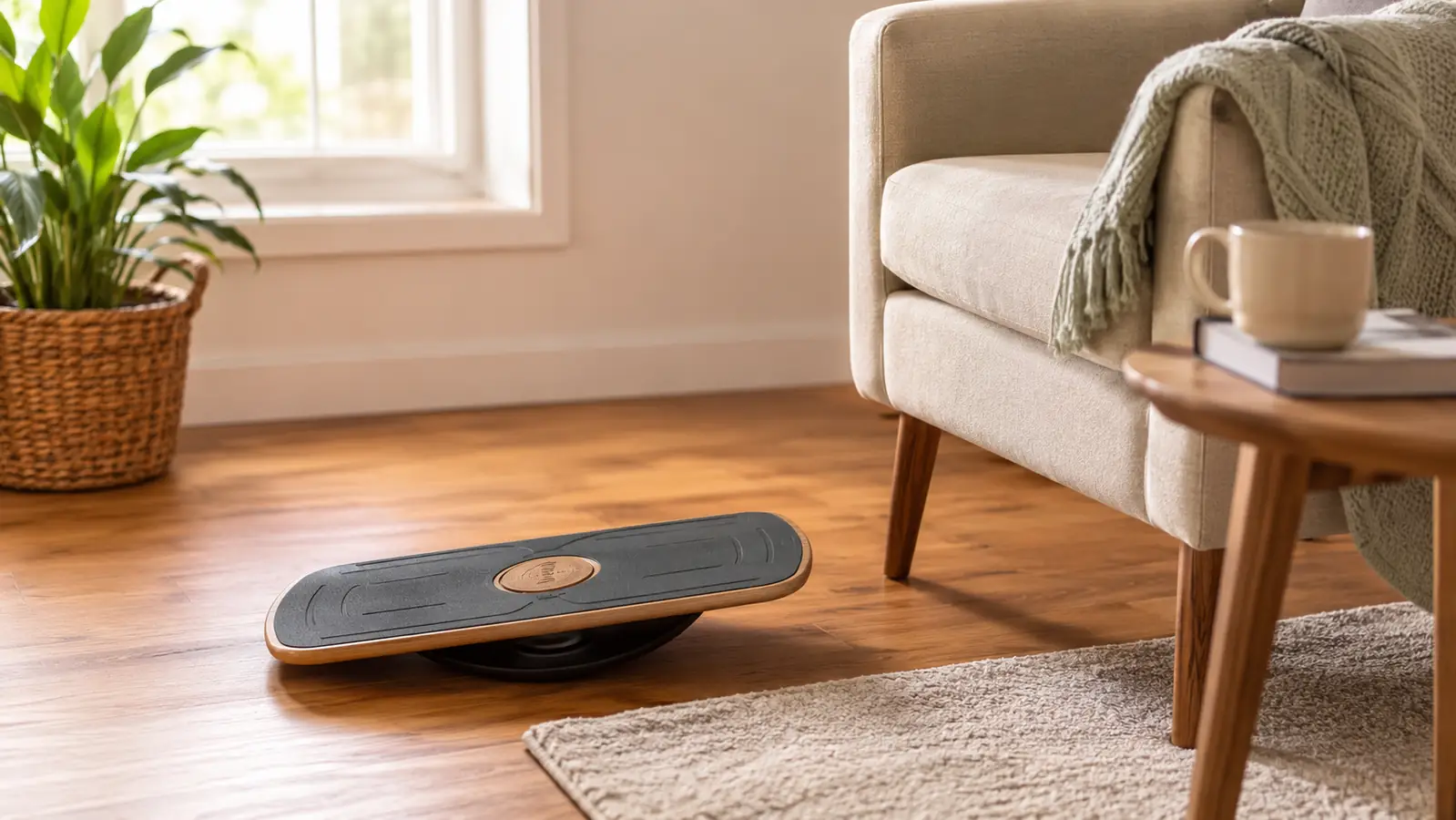
The thing people do not tell you about getting strong again in your fifties is that balance goes first, and it does not announce itself. Four years ago my lower back gave out partway through a walk, and as I rebuilt everything from the midline out I found mornings where I braced a hand on the wall just to step into a pair of shorts. I am 58, I train in my garage in Mesa, and I noticed that hand on the wall long before I wanted to admit it was a habit. That is the roundabout reason a wobble board ended up on my tile floor.
I should say plainly that I did not buy the EVERYMILE board expecting much. A practice board is the least dramatic piece of training equipment I own, and I have cycled through two of the fancier balance gadgets that now live under the workbench in pieces. This one stuck. Three months in, I stand on it every single day, most mornings and most evenings, and it is the only piece of gear that has lasted the year. That is not a transformation story. It is a maintenance story, and maintenance is the part everybody skips.
The Quick Verdict
A plain, forgiving wobble board that made daily balance work actually stick for a 58-year-old rebuilding stability at home. Not flashy, and honest about what it is not, but it does the one job better than anything else I own.
Amazon Check Today's Price →Balance is the maintenance nobody budgets for
Seventy seconds twice a day on the EVERYMILE board is what got me standing on one leg without the wall, and I only got there because I kept it out where I would trip over it. If that sounds like your kind of unglamorous fix, check today's price before you talk yourself out of two minutes.
Amazon Check Today's Price on Amazon →How I've Used It
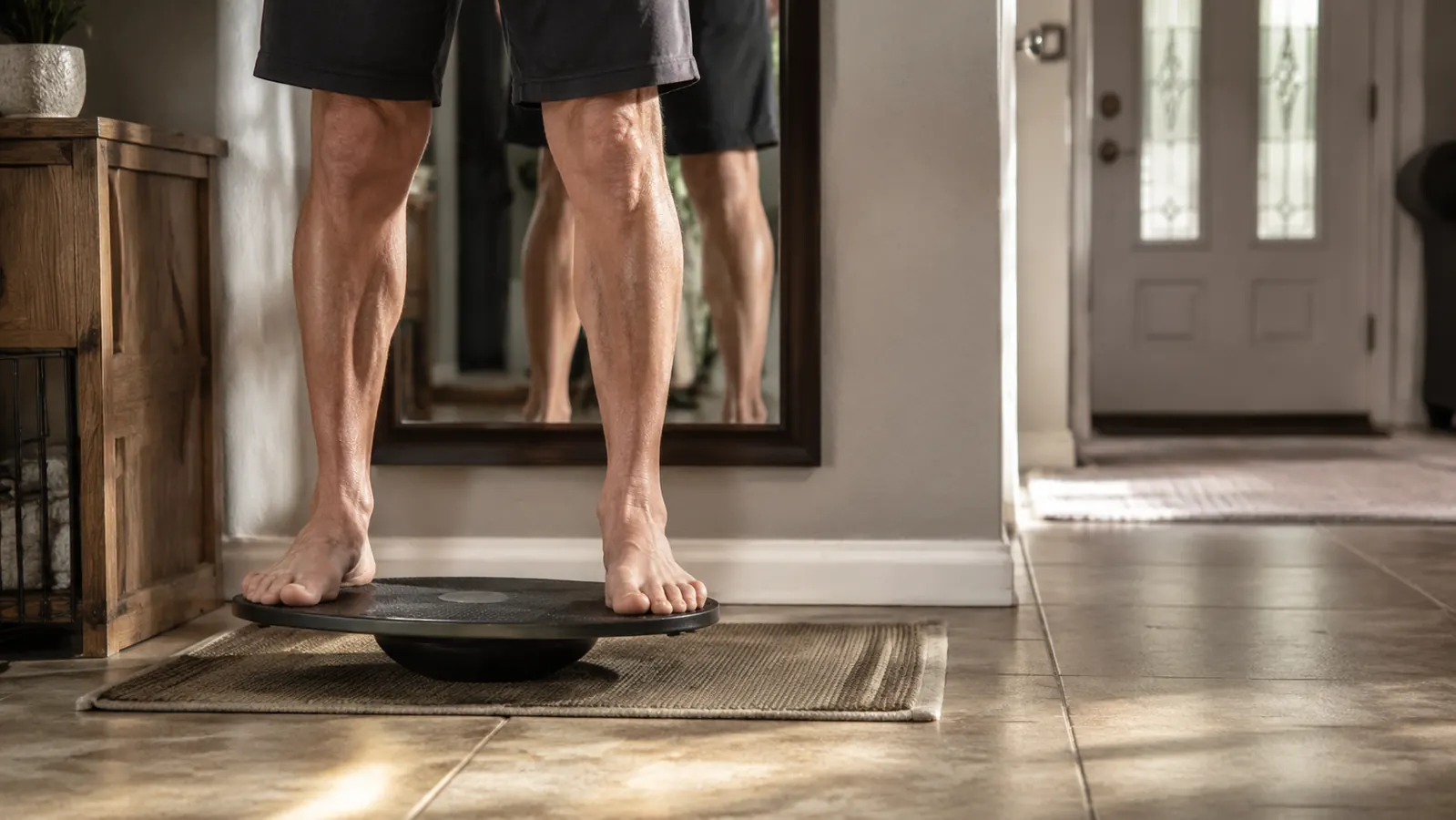
I keep the board on the tile in front of the hallway mirror, right where I walk barefoot past it a dozen times a day. That placement is the whole trick. Every balance gadget I gave up on before this one lived in a closet and died there quietly. This one lives in the path, so it gets used, and in the end that is the entire difference between a tool and a decoration.
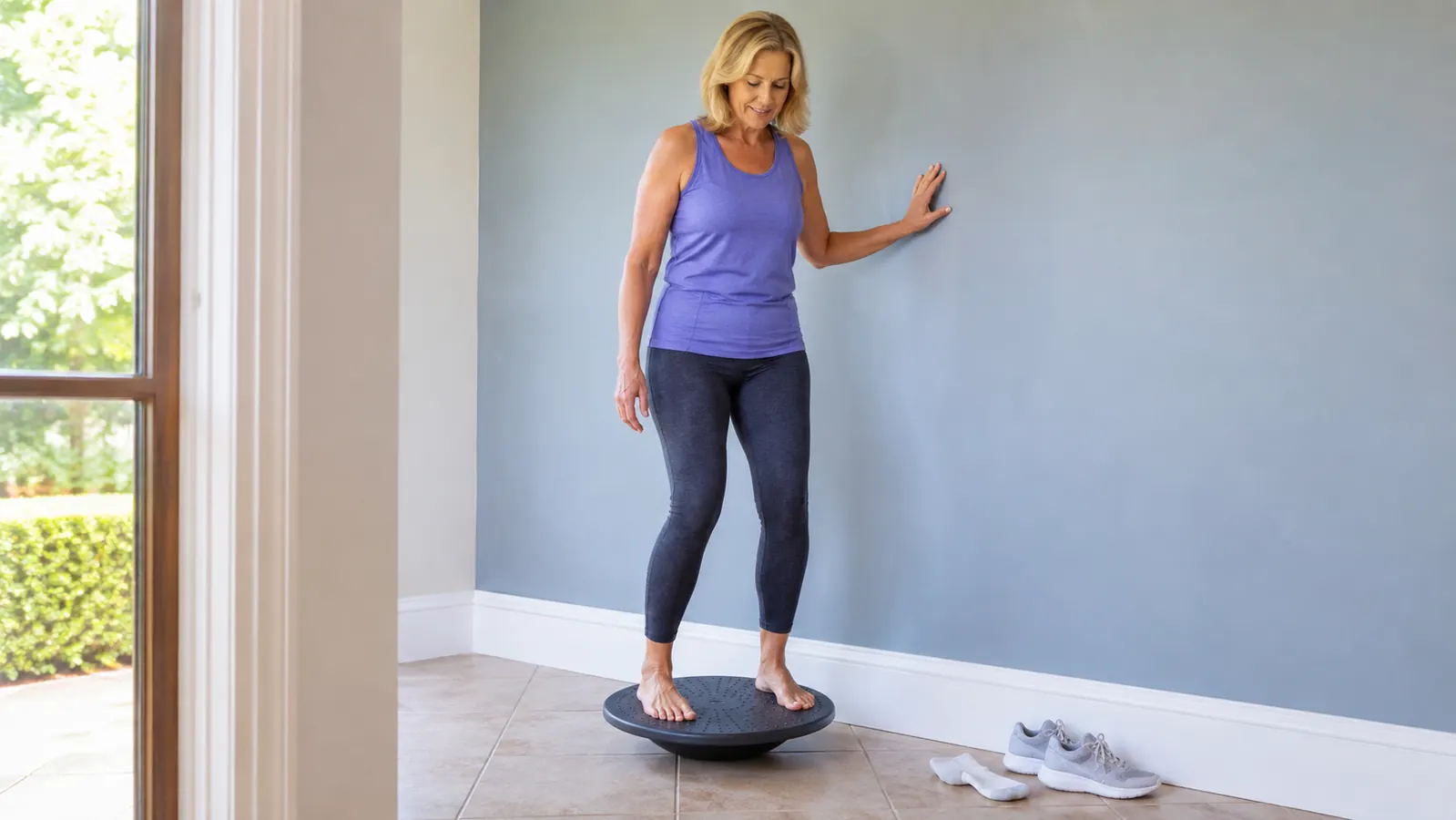
The routine is deliberately small. Seventy seconds twice a day, once while the coffee brews and again after dinner. I start with both feet and my hand near the wall, and when I feel steady I lift to one foot with two fingers resting somewhere. I switch feet every ten seconds or so and I pick a fixed point on the wall to stare at, because half of balance is where your eyes go, not where your feet are.
Some afternoons I use it at the standing desk instead, which the listing mentions and which works fine as long as there is a chair or a rail close enough to grab. Mostly though it is the morning and evening routine. The whole point of the exercise is that it is small enough that I never find a reason not to do it, and small enough that even a bad day is still worth the effort.
What the No-Skid Surface Actually Does
The surface is the part I was most skeptical about and the part that turned out to matter most. My bare feet grip it even when it has picked up a little dust, and I have never had the moment where I wished the grip were better. When you wobble, your body reads that underfoot trust before your brain does. Knowing the board will not slide out from under you is what lets your ankles actually start working instead of clenching.
I have used it in socks too, which it handles better than I expected, though I have come to prefer bare feet. Being able to feel the ball of my foot and my heel against the board is not a luxury. It is feedback, and feedback is what makes the exercise teaching me something instead of just shaking me around. On the days my feet are tired that feedback gets louder, which tells me to take it easy.
Let me be honest that this is still a simple object. A dense plastic disc with a pivot underneath, doing one job. The no-skid surface does that job well, and the board has held together through three months of daily use. But nothing about it is magic, and I would rather you hear that now than meet it disappointed later. It is a very good practice board, and it never pretends to be more.
What Seventy Seconds Actually Looks Like
If you have never stood on one, let me describe the first day honestly. You step on with both feet, and the moment you start to trust it, the board tips sideways and your whole body goes rigid. Your arms come up like you are on a ship. You lean toward the wall, catch yourself, laugh, and step off. That first session is maybe five wobbly attempts, none longer than a few seconds, and it is humbling in a way you will not expect.
That humbling is the point, and it is also the reason most people quit. So start close to something. I set up at the mirror specifically so the wall was an arm's length away, and I kept one finger on it for the first two weeks. There is no prize for doing this with no hands on day one. The prize is doing it at all, and the board makes that doable because it lets you fail safely a few feet from a handhold.
The progression has been the quiet win. Foot on the floor became one foot up for a few seconds, became ten seconds, became the full minute I measure now. Because the whole thing takes so little time, the steps up happened on their own without me scheduling stretches or buying anything else. That is the real value of the board, that it turns balance into a daily habit small enough to actually keep.
Three Months In: What I Can Measure
Here is what I actually notice, the measurable parts and not the marketing ones. I can now stand on my left leg, the weak one, for a full minute without touching the wall, which I could not do on day one. I can get up from the floor without a hand on the couch, which I have not managed in years. The board is the only thing I changed in that stretch, so I give it the credit, with the honest caveat that I am not running a trial, I am just living a routine.
The board itself shows its age in small ways. The printed lettering has worn where my foot pivots, and the edge has picked up a couple of scuffs from the tile. None of it touches how it works, and I have noticed no loosening in the pivot. If you need your equipment to stay pretty, those marks will bother you. I need mine to stay usable, and it does, which is the only thing I would want from a daily use board.
The thing that has not changed is how hard that first moment is. I still wobble for the first several seconds every single morning. That bothers some people, and I want to say plainly that it is supposed to happen. A wobble board that never makes you wobble is a plank of wood. What improves is not the wobble itself but how quickly you steady yourself, and watching that recovery get faster has been the quiet reward of the whole experiment.
I can now stand on my left leg for a full minute without the wall. The board is the only thing I changed.
The Tradeoffs Nobody Puts in the Listing
It is louder than you expect. Not arm-pounding loud, but the pivot clicks and rocks against a hard floor with a sound you will notice in a quiet house. I set a cabinet mat under mine, and that quieted it enough that the morning routine stopped waking anyone and stopped feeling like an event. If you have hardwood or tile and a light sleeper upstairs, budget for a mat before you buy.
It requires getting off the couch twice a day, which sounds like nothing and is genuinely the hardest part. In month one I chose the board over coffee some mornings, on purpose, because I knew if I sat down first I would talk myself out of it. That is not the board's fault, but it is part of the real experience and the real reason most of these end up in the closet.
And it will not build your legs. It is a balance tool, not a strength tool. My legs came back from squats at the rack, not from the board, and I would be lying if I told you otherwise. The board is the stability layer on top of that work, and it earns its keep precisely because it does not pretend to be a workout, which leaves no excuse for it to fail at being one.
What I Nearly Bought Instead
I almost bought a rocker board, the kind that tips forward and back like a see-saw under one foot. It has a real place, and on some days I still think about it. But it trains a narrower motion. A wobble board tips in every direction at once, which is closer to what an unexpected step or an uneven trail does to your ankle, and closer to the daily life of someone my age who would rather not fall.
I also weighed a balance cushion, which is softer, cheaper, and genuinely good for sitting balance work. But I wanted the standing challenge, and I know myself well enough to know that a soft cushion under my feet would have felt too forgiving and quietly ended up under the workbench with the others. The honest verdict is that for daily standing balance in an ordinary home, the wobble board was the right call for me. If your goal is strictly softer seated work, a cushion is the cheaper and better tool, and I would not argue with that choice.
Why This One Beat the Other Two
I have owned two other balance gadgets that now live under the workbench, and it is worth saying plainly why this one is still on the floor. The first was a wobble cushion that was too soft to challenge me standing and too tedious to use sitting, so it fell into the gap between and never got used. The second was a rocker board that tipped so aggressively that my ankle gave up watching it, and I steered around it every morning rather than onto it.
The EVERYMILE board found the gap I actually hang around in. It is difficult enough that standing on it still counts as training, but forgiving enough that I look forward to it instead of bracing for it. That is not a feature on the box. It is the whole reason the habit stuck, and the habit is the product. For my money, the gap between a board you use and a board you own is the entire difference in this category. And because the whole habit costs me a couple of minutes a day rather than a scheduled hour, it is the one piece of training gear that has never once lost to a busy morning. That is a low bar, and this is the only thing in my garage that clears it.
What I Liked
- Gentle enough that a beginner can actually start, hard enough to keep
- No-skid surface grips bare feet and socks through months of use
- Small, flat, and light enough to live in the path so it actually gets used
- Works beside a desk or in front of a mirror in under two minutes
- The pivot and disc hold up to daily wobbling
Where It Falls Short
- The pivot clicks and rocks against hard floors until you add a mat
- It only works if you get up and stand on it, and that is the real hurdle
- Balance training only; it will not build leg strength
- Printed lettering and edges wear with daily use
Who This Is For
This board is for you if balance is quietly fading and you want a low-embarrassment, low-excuse way to start. If you can stand on it barefoot near a wall for a few seconds a few times a week, it meets you exactly where you are and grows with you from there. That is the whole pitch, and it is an honest one, which is more than most equipment listings can say.
It is especially right if you have rebuilt strength, the way I did, and then realized the foundations underneath it had gone soft. Balance does not recover just because your muscles do. It needs its own daily feed, and this board is about the cheapest, least intimidating feed I have found. If you want the longer case for why balance work belongs in every routine after 50, I wrote it up in the listicle on why balance training prevents falls.
Who Should Skip It
Skip it if you are after leg strength or a sweat, because this is neither. Skip it if you have a recent ankle, knee, or foot issue that a doctor has not cleared, because a wobble board challenges unstable joints and you should get the all-clear first. And skip it if you know you will never get off the couch to use it, because no board can fix a routine you will not start.
The hype-free truth is that this helps only the person who actually stands on it, and I say that as someone who almost stopped standing on it myself. If you want a comparison between this and the other popular wobble board before you commit, I put the EVERYMILE side by side with the StrongTek in a separate comparison, where the honest difference comes down to difficulty and the grip you will usually buy for.
Seventy seconds, twice a day: that is the whole program
If balance is the maintenance you have been silently skipping, the EVERYMILE board makes the first step embarrassing instead of imposing. Keep it in the path, stand close to a wall, and check today's price before you talk yourself out of two minutes.
Amazon Check Today's Price on Amazon →