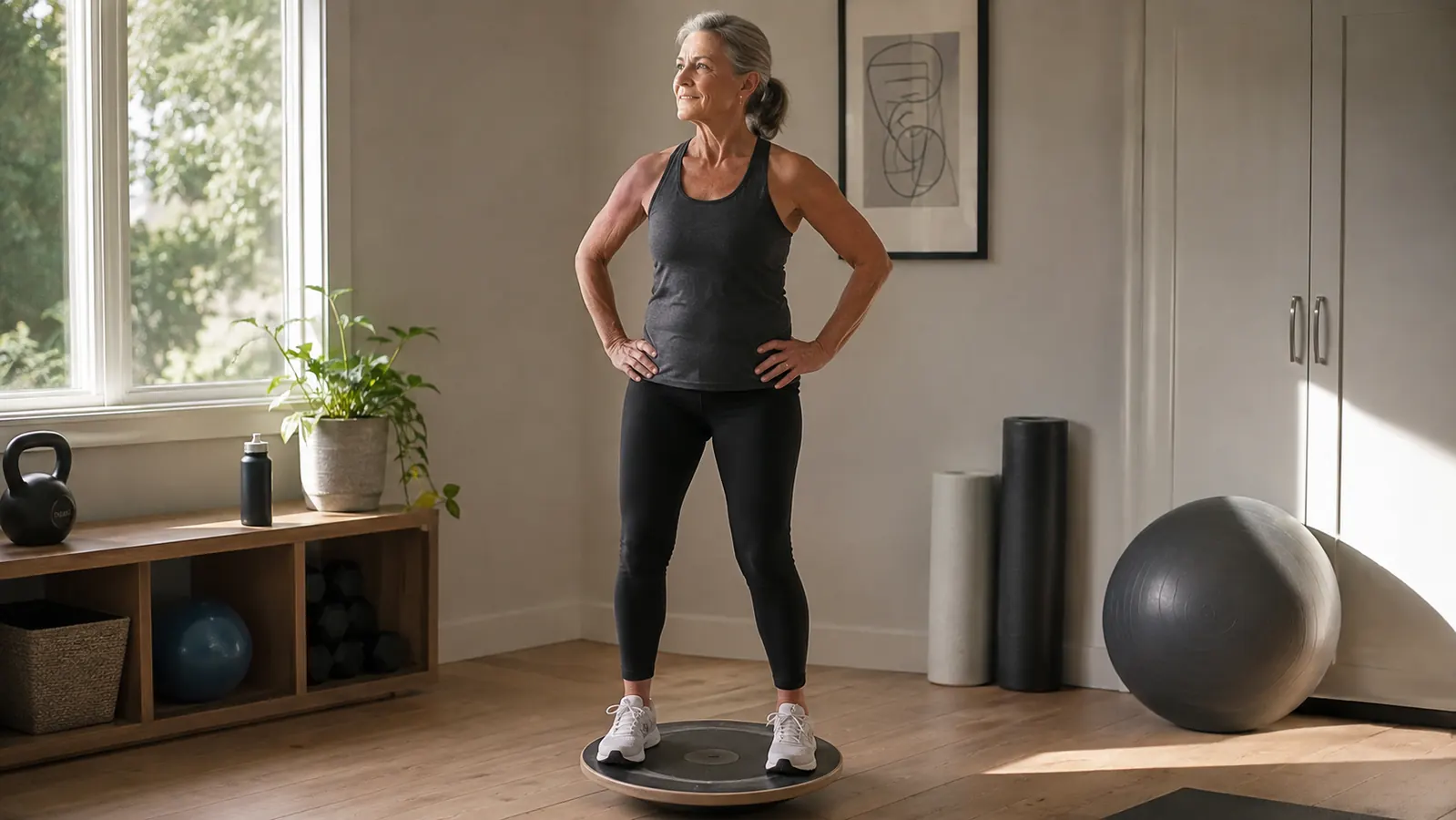
If you are weighing the EVERYMILE against the StrongTek wobble board, the honest short answer is that both are good boards and the right choice comes down to one question: do you want a board that gets harder as you get better, or do you want the most uncomplicated, economical board you can stand on a few minutes a day? I am Evelyn Marsh, 58, from Mesa, and I have used my EVERYMILE nearly every day for about a year. Before I bought it, I tested the StrongTek for three weeks so I could tell you the difference for real. The short version of what I found is that they are closer in quality than the price tags suggest, and the decision should not really be about which one is built better. It is about which one you will still be standing on in six months, and that is a question only you can answer honestly, so I am going to hand you the pieces instead of pretending there is one right pick for everyone.
For an adult over 50 starting balance work from scratch, I would put the EVERYMILE first, because you can soften it on day one and stiffen it as your ankles and core come back, all on the same board. The StrongTek is the better value if you mostly want a simple, grippy board and would rather not think about adjustments at all. I will tell you up front which way I lean, because the whole point of this is to save you the three weeks of testing I did. Here is the table, then the reasoning, then who I would point at each board. Read the table as a quick map, but keep reading the sections underneath, because the parts the table cannot squeeze in are the parts that actually decide the matter.
A quick note on why this matters at all. Balance is one of the first things to quietly fade as you age, and it is also one of the most trainable. Standing on an unstable surface for even a couple of minutes a day asks your ankles, knees, and core to do the small corrections they otherwise stop getting. That is why I came to boards in the first place: after my back episode I wanted something that strengthened me in place rather than asking me to bounce around, and a wobble board fit exactly that. Neither of these boards is a medical tool, and I am not pretending otherwise. They are a low-cost way to give your body a daily dose of the most ordinary kind of strength, the kind that keeps a fall from happening in the first place. My own reasoning was simple: I would rather spend a few quiet minutes a day teaching my ankles and legs to catch me than wait until a stumble forces the lesson, when the stakes are higher.
| EVERYMILE | StrongTek | |
|---|---|---|
| Price | Priced in the normal range for a full-size wobble board, and the added difficulty bands come in the box | Usually a few dollars less at checkout for a similar footprint |
| Difficulty control | Two removable bands let you wobble as little or as much as you want, so a true beginner can start gentle | One fixed dome, the wobble is what it is, no way to soften it |
| Room to grow | Start gentle, then take the bands off to make it harder; one board covers beginner to advanced | Once the single difficulty gets easy, you would be shopping for a harder board to keep progressing |
| Surface grip | No-skid top is fine in bare feet, but gets slicker when you are in socks | Textured top keeps a grip even in thin gym socks on a cold floor |
| Piece count | The bands and posts are two more small parts to store and not lose | One solid dome and nothing else in the box, nothing to keep track of |
| Best for | The person who wants one board that grows with them and plans to stick with balance work | The person who wants the cheapest straightforward way to try a few minutes of wobbling a day |
Where EVERYMILE Wins
The reason I bought the EVERYMILE is those two removable bands, and I did not expect them to matter as much as they did. I came to balance work with a lower back that does not like surprises, and the idea of stepping onto a board that immediately tilts to its hardest angle was off-putting. With the bands in place the board still rocks under you, but it moves less and drifts back to center more slowly. That gentleness is exactly what a person needs in the first few weeks, and it is the difference between a board you actually use and one that gathers dust in the corner of the garage. When I first stood on it with both bands in, I remember being almost disappointed that it felt this easy, and then realising that was the point: easy enough to want to come back to tomorrow.
The flip side of that same feature is that you never outgrow the board. Once the gentle setting stops feeling like anything, you take a band off and the wobble gets steadier and more demanding. When even that gets easy, you take the other one off. I went from barely hanging on for thirty seconds to holding a quiet rock for two minutes without touching the wall, all without buying a second, harder board. For someone who does not want to own a small graveyard of exercise gear, that counts for a lot. It also means the board keeps pace with improvement that sneaks up on you, so there is rarely a week where it feels either pointless or impossible, which is precisely the range you want to sit in if you plan to make this a habit.
The build held up too. Mine has spent a year getting walked on in bare feet and socks, set down hard a few times, and left on the garage floor through desert heat and chillier nights, and the no-skid surface still looks like new. I cannot speak to the StrongTek over a full year because I only had it for three weeks, but in new condition it is clearly a quality board. So I would not pick between these two on build quality alone, either way. They are both built to be walked on, and both held up fine to everything I gave them. Surface finish is where they genuinely split, and I have covered that below, because for me it turned out to be a real factor once the weather cooled and socks came back into the picture.
How Steep Is the Learning Curve
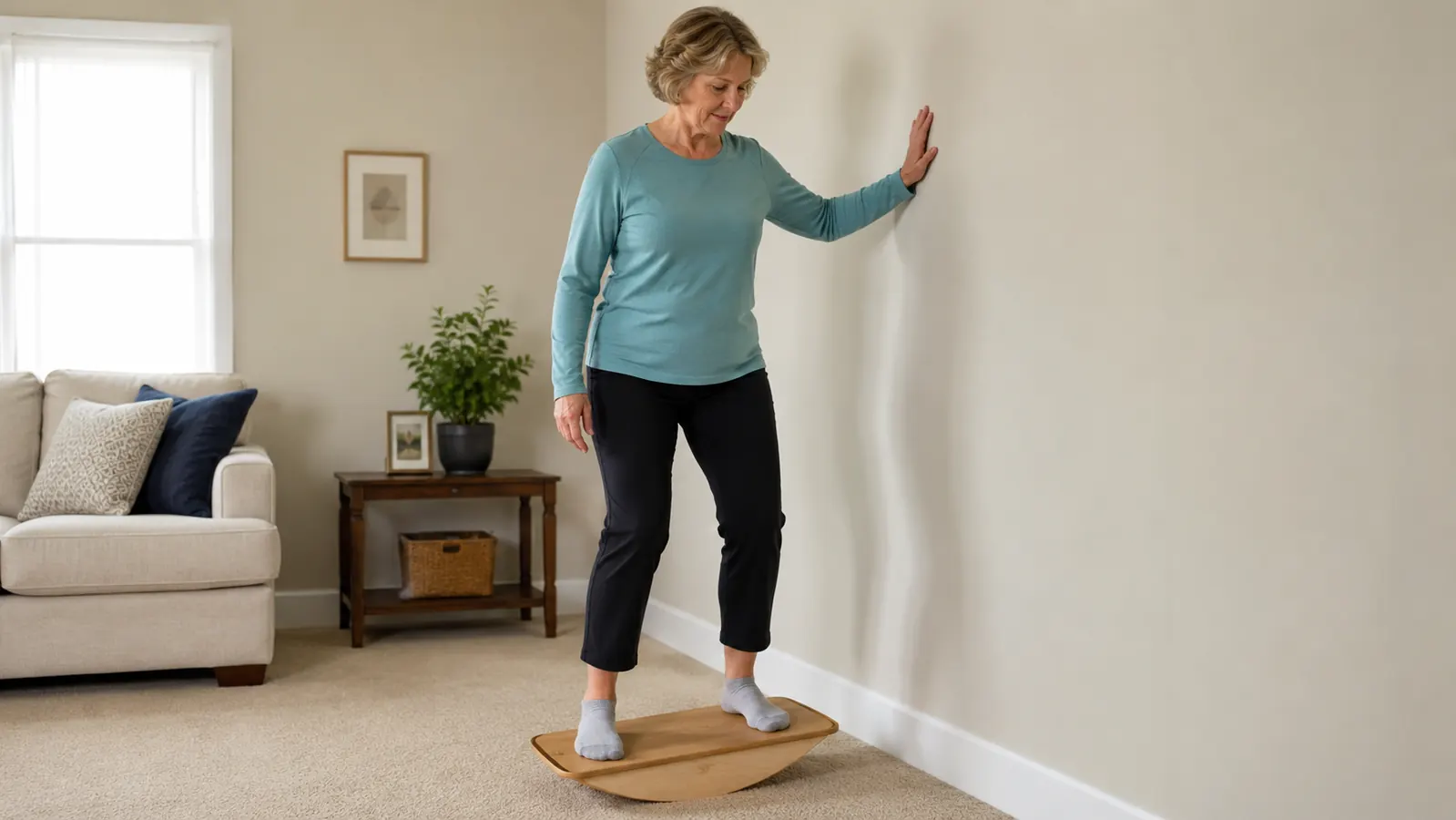
The honest answer is that both boards will humiliate you on day one if you expect to stand perfectly still, and neither should be approached that way. The EVERYMILE with its bands in place tips more slowly, which makes day one tolerable. The StrongTek has a shorter, punchier wobble, so your ankles work in tighter little bursts and it helps to have a wall close by at first. That is not a ding against the StrongTek, it is simply a different feel, and for some people the punchier rock feels like more of a real workout sooner. If you are the type who likes to feel that something is happening on the very first session, the StrongTek hands you that sensation faster, and that is a fair reason to lean its way.
A trick that works for both: do not aim to stand still. Aim to let the board tip and catch it, over and over, for a timed two minutes. That is the whole exercise, and it is why I can do it in the middle of a workday with no setup. Start near a chair or a wall, keep one finger ready, and only ease your grip away as your ankles settle down. On the EVERYMILE I could do this sooner because of the gentler tip. On the StrongTek I leaned on the wall a lot more in week one, which is exactly why I keep recommending the gentler start to anyone whose knees, ankles, or back are not fully with them. Give yourself two honest weeks before judging either board, because the first few sessions are all about your unfamiliar legs, not the board.
Where StrongTek Wins
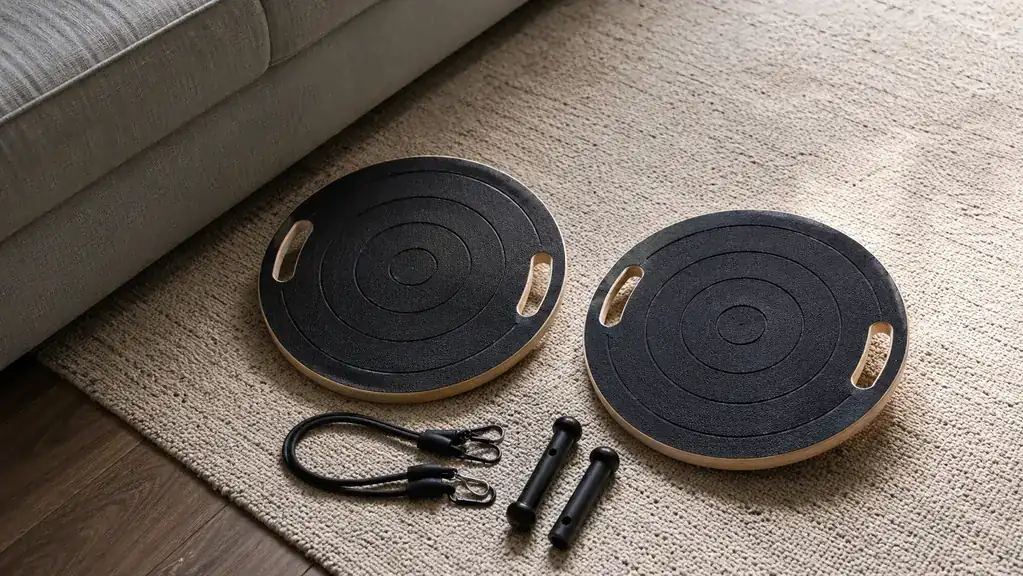
The StrongTek would be my pick for someone still deciding whether balance work is even for them. It usually costs a little less, and it is a single solid piece with nothing to adjust, nothing to store, nothing to lose. You take it out of the box, put it on the floor, and stand on it. If you decide wobble boards are not your thing after two weeks, you are out a small amount of money and there is no kit to pack back up. That is a real virtue for a hesitant buyer, not a minor one. Low commitment gear has a better chance of actually being used, and for someone who has watched too many gadgets turn into dust collectors, that simplicity is the strongest argument the StrongTek has.
Its other genuine edge is the surface. The StrongTek top is textured enough that it holds you even in thin socks on a cold concrete garage floor. The EVERYMILE no-skid top is fine in bare feet, but in socks it gets slicker than I would like now that winter has arrived and I train in socks. If you wear socks for your sessions, that difference is worth weighing before you decide. This is the one place I would call the StrongTek plainly better rather than merely different, and it matters more than people expect, because grip is the thing you stop noticing exactly when it fails. A board you feel safe on is a board you will step onto without hesitation.
One more thing in its favor: there is nothing to explain to anyone else in the house. A single board reads as a simple thing to stand on, where the EVERYMILE with its bands and posts reads as more of a system. If you want a small, quiet footprint in a shared space and the fewest parts within reach, the StrongTek is the tidier box to live with. Simplicity is a feature people underestimate, especially for gear that is supposed to be grabbed and used without a thought. When the choice is between an appliance you reach for without ceremony and a little project you have to set up, most of us will reach for the former far more often on the days we are tired.
The board that starts gentle and grows with you
If you are starting balance work after 50 and want no hard entry step, this is the board I bought and still use almost every day.
Amazon Check Today's Price on Amazon →Who Should Buy Which
If your plan is to do balance work for a couple of minutes most days and you want that work to grow with you, the EVERYMILE is the better buy. You start gentle, so there is no humiliating day one where you cannot hold still for a count of ten, and you advance without buying anything else. That is the honest recommendation I give most people my age, because consistency matters more than intensity and this board makes consistency easy. The detachable bands are the whole pitch, and they earn their place. You are effectively buying several difficulty levels in one delivery, which keeps the cost of the habit low and the motivation to return high.
If you just want to dip a toe in, or if a grippy surface in socks matters more to you than difficulty settings, the StrongTek will save you a little money and give you a simpler, more solid-feeling board. Neither is a bad choice, and I am not saying that to hedge. They are two genuinely good boards doing different jobs, and the right one depends on whether you are ready to commit or still exploring. I made the same decision myself, and a year in I have no regrets about the route I took. What I would ask yourself before ordering either is a single honest question: do you see yourself on this in three months? Your answer points you to the right shelf without any help from me.
And if you spend part of your day at a standing desk, both of these work there, which is where they earn their keep twice over. I keep the EVERYMILE under my desk and step on it for a minute here and there, bands in, and it doubles as ankle work without me having to carve out separate time. The StrongTek would do the same job, just with no settings to fuss with and a better grip under socks on a smooth tile. Both beat doing nothing, which is honestly the comparison that matters most of all. Whatever you decide, the winning move is not which brand you order, it is that you give your balance work a real three-week trial before you give it a verdict.
Still choosing between the two?
The EVERYMILE covers a true beginner through to advanced on one board, which is exactly why it lives in my garage and not back on the shelf.
Amazon Check Today's Price on Amazon →